
The Ubosot and Its Art
A cruciform marble ubosot, door and window panels of lacquer inlaid with mother-of-pearl, a jade-stone floor, and mural paintings
Wat Chulamanee is presumed to have been built between B.E. 2172–2190 (1629–1647). The monastic dwellings and the ubosot of that time were all built of teak and other hardwoods, but the passing of time inevitably made them decay and fall into ruin. Many abbots therefore took on the task of restoring and repairing this historically important temple, keeping it firm and beautiful through the ages, until the era of Luang Pho Nuang and Luang Pho Itthi, who built the renowned new ubosot of the present day.
The cruciform marble ubosot
On 23 May B.E. 2510 (1967), Phra Khru Kowitsamutkhun (Luang Pho Nuang, Kowitho) convened the temple committee and his disciples to discuss building a new ubosot to replace the old one, which had fallen into disrepair. The meeting agreed, and Luang Pho Nuang — a meditation master revered by disciples throughout the country — was asked to produce the sacred "Luang Pho Nuang" medals of the edition that his disciples called the "birthday" edition, "No. Bon," and "Na Sanghati," to give to those who contributed funds. Everything proceeded well, until the foundation-stone-laying ceremony on 15 August B.E. 2511 (1968), at which the Supreme Patriarch Somdet Phra Ariyawongsakhatayan, Supreme Patriarch and Head of the Sangha (Chuan Utthayi), was invited to come and preside over the ceremony.
Luang Pho Nuang restored Wat Chulamanee until it became a shaded and tranquil sacred place. The new ubosot is a three-tiered cruciform marble structure, 10 metres tall, with a construction cost numbering in the tens of millions of baht, with disciples and the faithful contributing donations beyond the budget. The visungkhamasima (royally-granted consecrated boundary) granted to the ubosot is 40 metres wide and 80 metres long. Luang Pho Nuang oversaw the construction with meticulous care for more than 20 years.
The door and window panels of lacquer inlaid with mother-of-pearl
After Luang Pho Nuang passed away, Luang Pho Itthi carried on the unfinished work of building the ubosot to completion — laying the floor of the uppermost tier with jade stone from Karachi, Pakistan, and building the six remaining unfinished window panels on the north side, each 40 centimetres wide, 10 centimetres thick, and 3.1 metres tall. The inner faces are carved with Thai ornamental designs and scenes from the Jataka tales, while the outer faces are exquisite work in lacquer inlaid with mother-of-pearl, depicting the royal seals of each reign, the state emblem, and the insignia of royal decorations, namely:
The royal seal of the reign of King Rama I (Phra Phutthayotfa Chulalok the Great)
King Rama II (Phra Phutthaloetla Naphalai)
King Rama III (Phra Nangklao)
King Rama IV (Mongkut)
King Rama V (Chulalongkorn the Great)
King Rama VI (Vajiravudh)
King Rama VII (Prajadhipok)
King Rama VIII (Ananda Mahidol)
King Rama IX (Bhumibol Adulyadej the Great)
The royal cipher of Queen Sirikit the Queen Mother (Sor. Kor.)
The Princess Mother (Srinagarindra) (Sor. Wor.)
HRH Crown Prince Maha Vajiralongkorn (Mor. Wor. Kor.)
HRH Princess Maha Chakri Sirindhorn (Sor. Thor.)
HRH Princess Chulabhorn (Chor. Phor.)
The insignia of The Most Illustrious Order of the Royal House of Chakri (Mor. Chor. Kor.), B.E. 2484
The Ancient and Auspicious Order of the Nine Gems (Nor. Ror.), B.E. 2484
Knight Grand Cordon (Special Class), the Order of Chula Chom Klao (Por. Chor. Wor.), B.E. 2461
Knight Grand Cordon (Special Class), the Order of the White Elephant (Mor. Por. Chor.), B.E. 2452
Knight Grand Cordon (Special Class), the Order of the Crown of Thailand (Mor. Wor. Mor.), B.E. 2416
Knight Grand Cross (First Class), the Order of the White Elephant (Por. Chor.), B.E. 2412
Knight Grand Cross (First Class), the Order of the Crown of Thailand (Por. Mor.), B.E. 2436
Every image in lacquer inlaid with mother-of-pearl is circular, 20 centimetres in diameter, set within the square frame of a window panel, seven images per panel, with the images on the left and right panels of each opening being identical. Together with the images on the window panels and the doorways of the ubosot on all four sides, the ubosot of Wat Chulamanee also has images of the state emblem, the insignia of royal decorations, scenes from the life of the Buddha, and various Jataka tales for the public to study — more than 200 images, which are now complete and which many interested visitors come to ask to view.
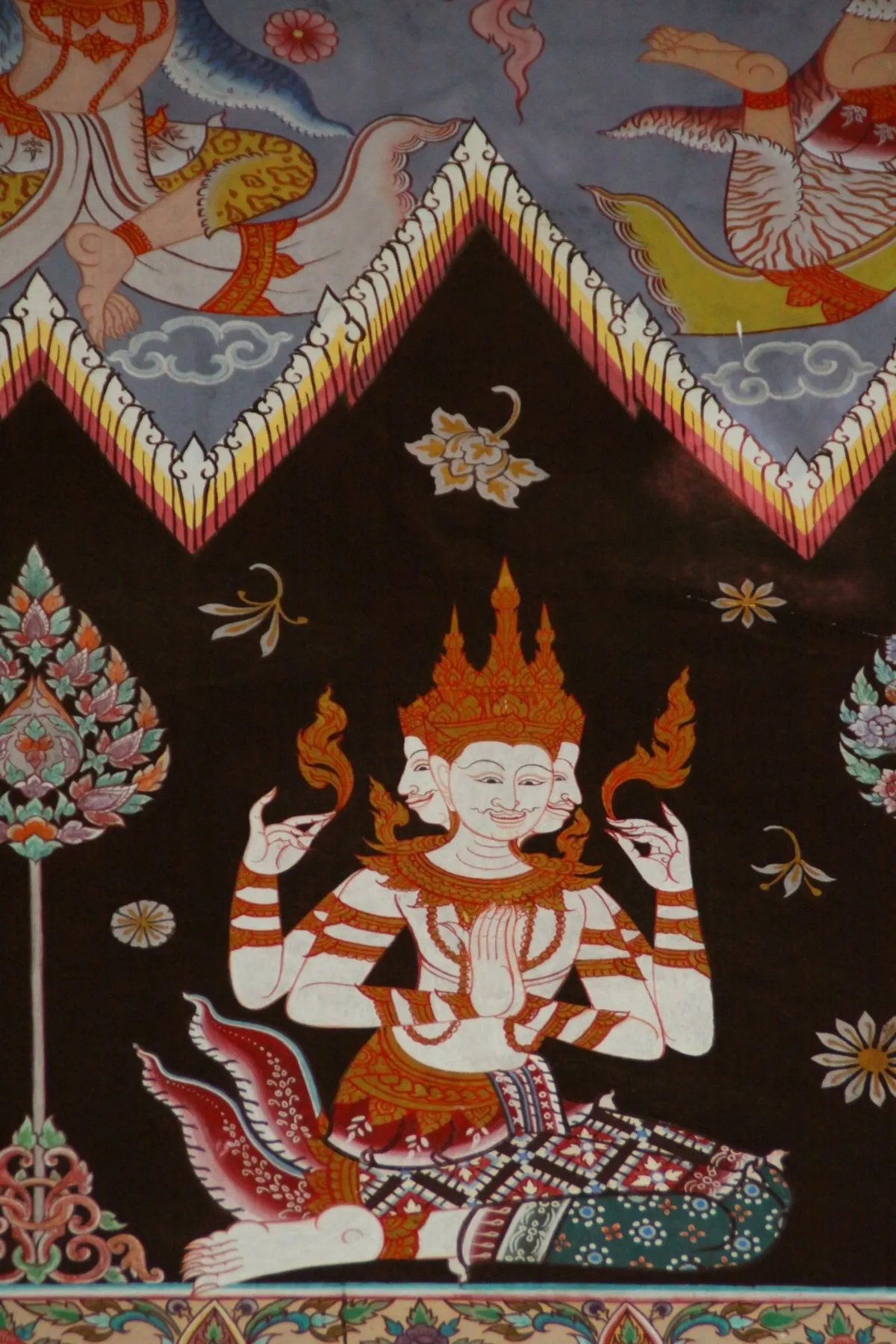
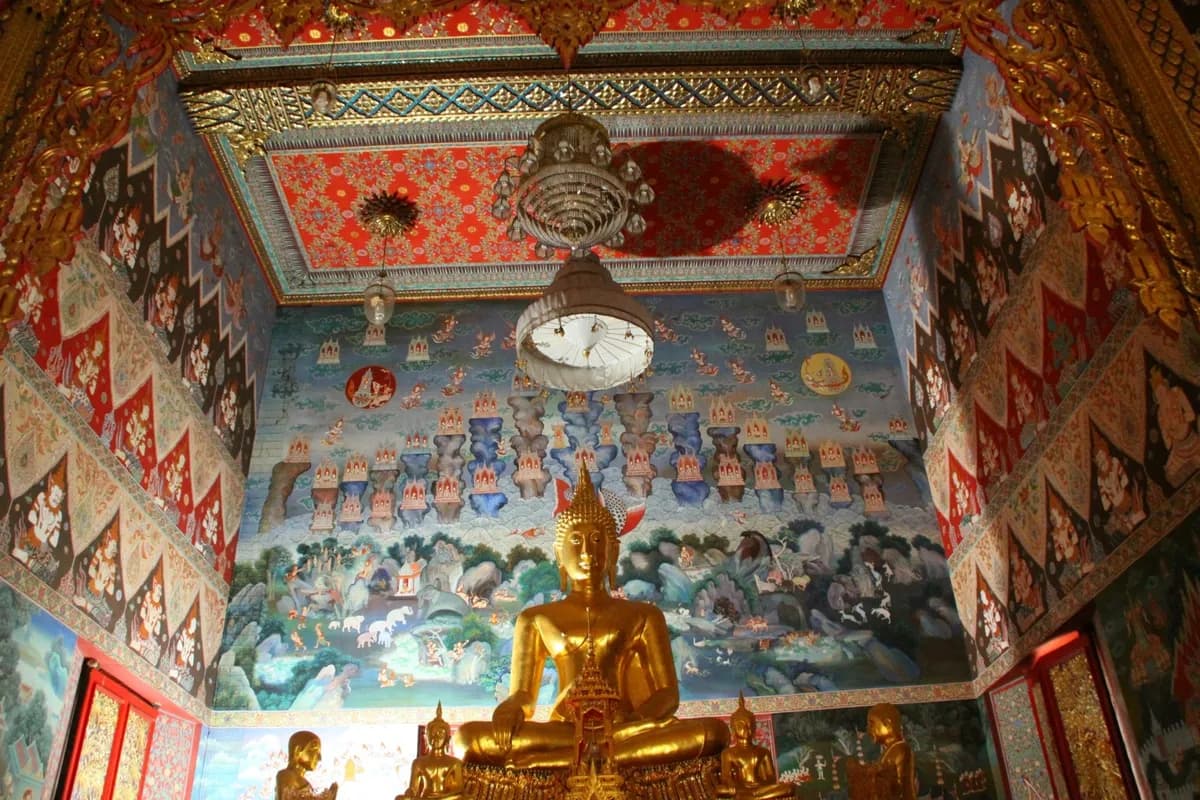
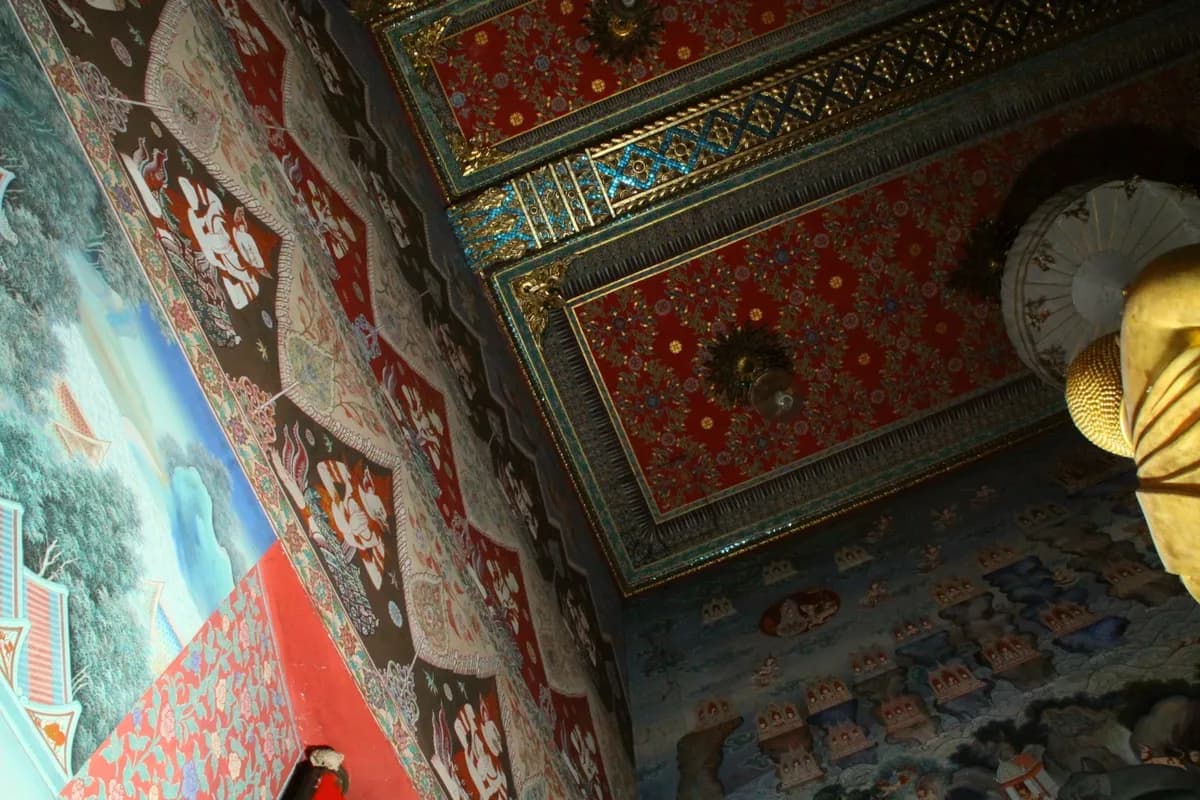
The "Rattanothaya" art-style mural paintings
Phra Khru Sophitwiriyaphon (Phra Achan Itthi) arranged for the creation of mural paintings in this three-tiered cruciform marble ubosot, with the inner faces of the doors and windows carved in Thai ornamental design, and the outer faces in lacquer inlaid with mother-of-pearl, adorned with alloy floral-vine patterns on every door and window, and with figures of the deities of the directions in alloy on the outer faces of the windows.
Luang Pho Itthi told of the motivation behind it: throughout the time he went in to perform the monastic duties in the ubosot, such as chanting the daily devotions, every time he looked around the walls and ceiling he saw only empty spaces, and felt it a pity that those spaces were unused. He therefore conceived the idea of creating mural paintings on the walls and ceiling, to remind and inspire the faithful to incline their minds further toward the Dhamma, and also to benefit those interested in studying art, and to preserve the nation's art and culture for later generations. He therefore engaged painters to paint in a style combining Ayutthaya art with Rattanakosin art, which he called this style of painting the "Rattanothaya art style," and so began painting on the walls and ceiling of the ubosot.
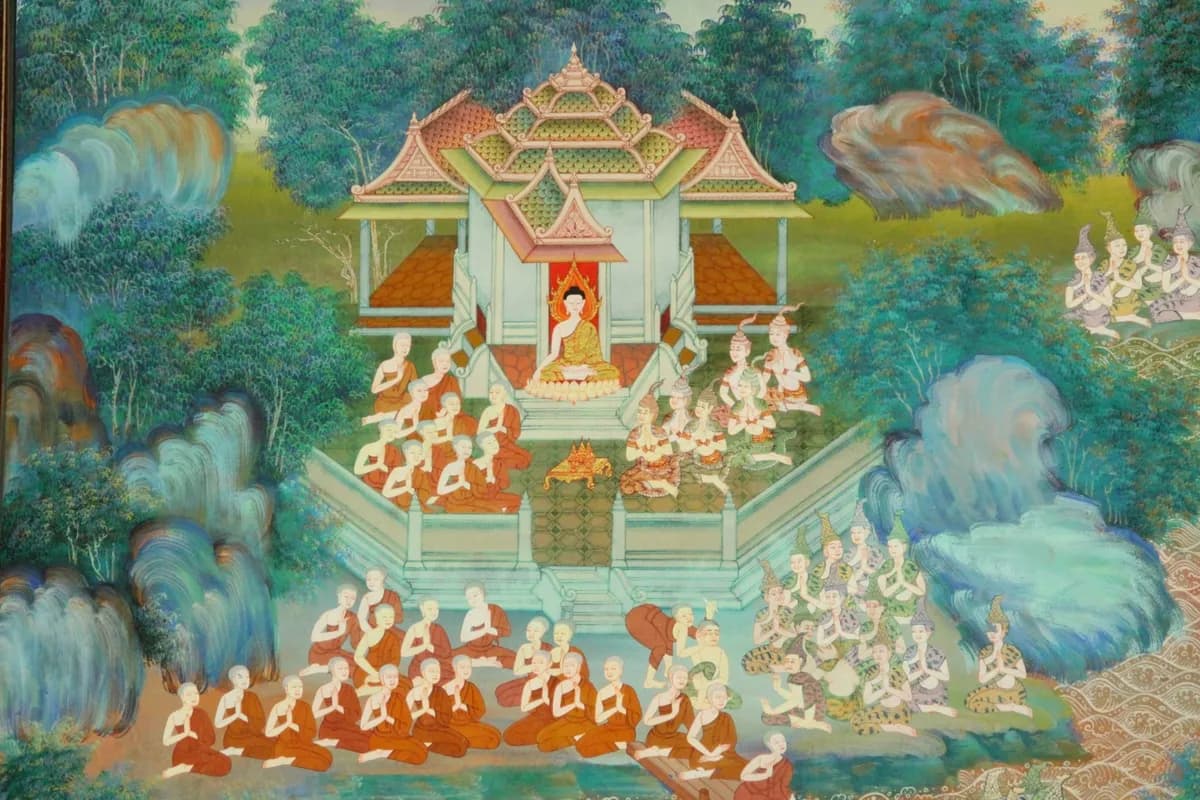
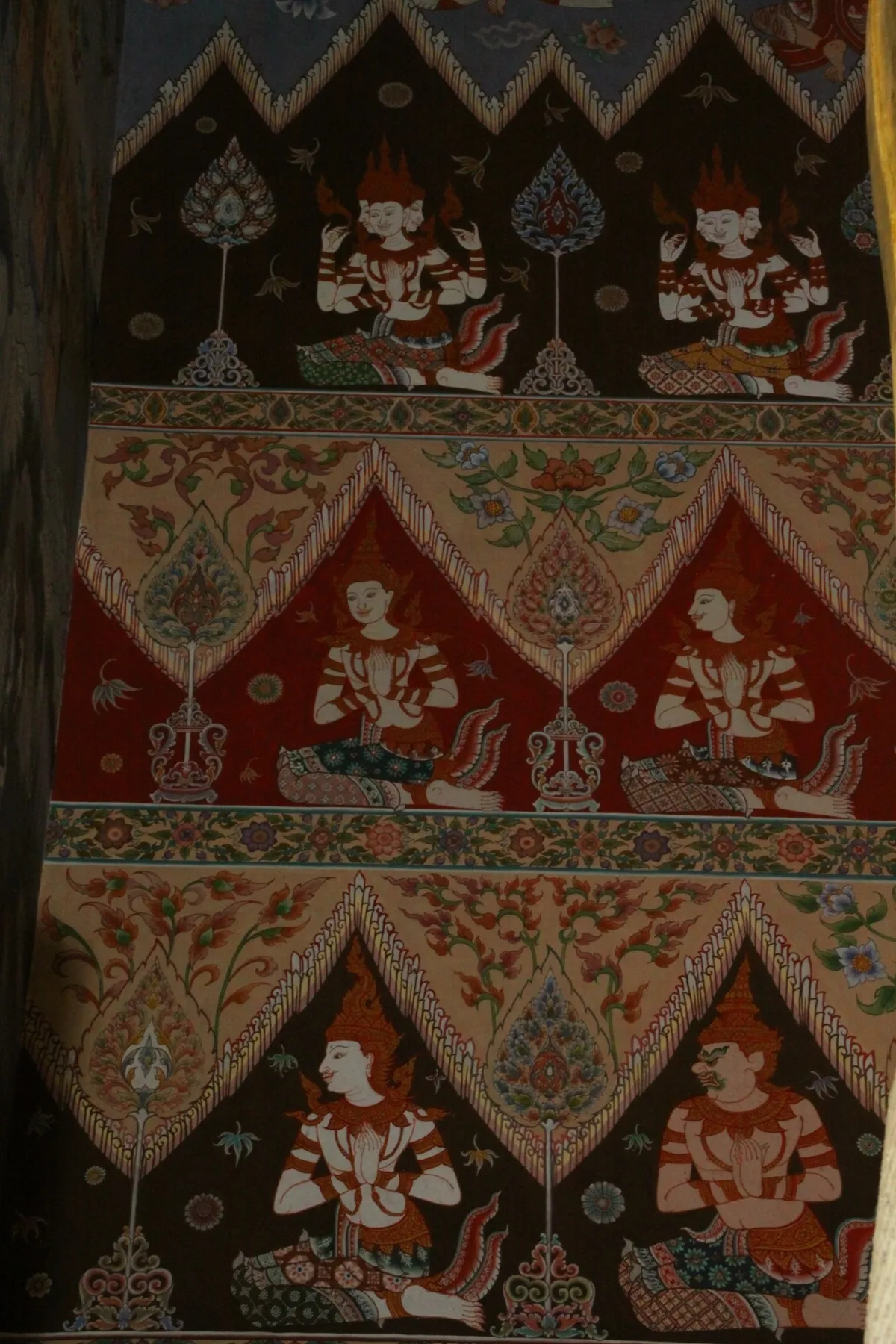
Gallery of the Ubosot Art and Murals
Mural paintings and artwork within the cruciform marble ubosot of Wat Chulamanee, gathered here for those who wish to study their beauty in detail.