
The temple's principal deity
Tao Wessuwan: God of Wealth, King of Yakshas, Guardian of Buddhism
An overview: his origins in both the Brahmanic–Hindu and Buddhist traditions, his four manifestations, the mantra of veneration with translation and commentary, and the deeper Dhamma meaning — as enshrined at Wat Chulamanee.
Introduction
Among the sacred figures revered by Thai people, "Tao Wessuwan" (also spelled Tao Wessuwan, Pali: Vessavaṇa) is one of the most deeply woven into Thai life — both as a deity who bestows wealth and fortune and as one who holds power over spirits and demons, able to protect against dangers both seen and unseen. This is why we find images of him standing tall, mace in hand, at the gateways of temples, ordination halls, and shrines across the country, serving as the guardian of the sacred precincts.
But behind this familiar image lies a profound history that spans both the Brahmanic–Hindu and the Buddhist traditions, appearing across many realms and in many forms. This article introduces his origins, his four manifestations, and the mantra of veneration together with its translation and commentary, for a clearer and deeper understanding.
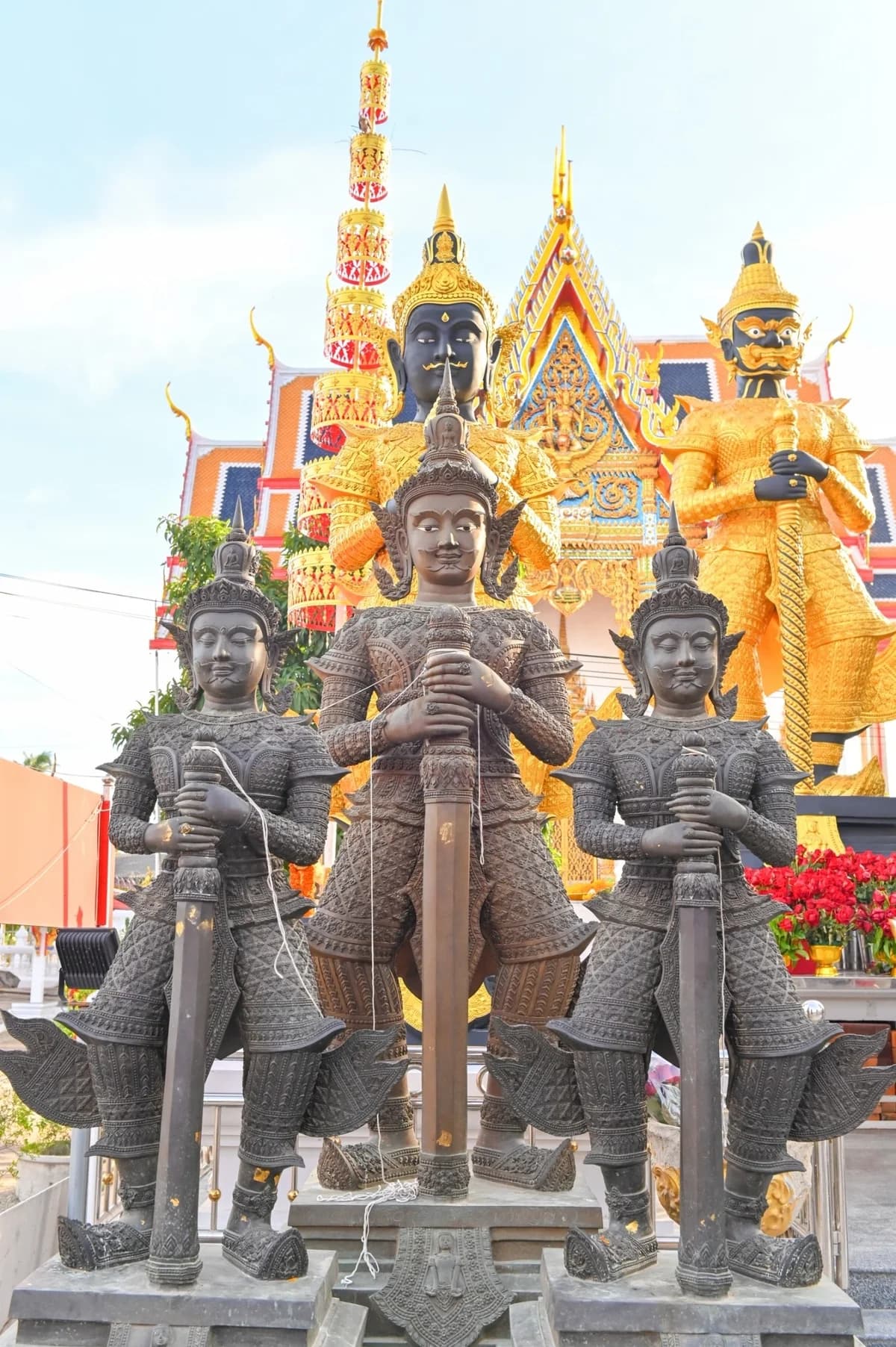
The Origins of Tao Wessuwan
The Meaning of the Name
The name "Wessuwan" has been explained in several ways. One holds that it derives from vessa (merchant, trader) joined with suvaṇṇa (gold), thus meaning "one rich in all forms of treasure," fitting his role as a god of wealth. Another, following the Pali tradition, holds that the name "Vessavaṇa" comes from his having once reigned over a city named "Visāṇa", so that he took his name from the land he ruled.
He also bears several other names, such as Lord Kubera (Kuvera) and Vaiśravaṇa (Phaisop in Thai), and is known across other cultures — the Chinese call him "Duowen Tianwang" (多聞天), and the Japanese "Bishamonten" (毘沙門天).
Origins in the Brahmanic–Hindu Tradition
In Hindu mythology, Kubera is the son of the sage Vishravas (Rishi Vishrava). According to the Ramayana, he is therefore the half-brother of Ravana (Thotsakan). Originally Kubera ruled the city of Lanka, fashioned by Vishvakarma, before Ravana seized Lanka and the divine flying chariot from him.
Hindu lore tells that Kubera performed austerities for thousands of years until Brahma and Indra descended to grant him a boon. He asked to be a world-guardian watching over the human realm, and Brahma appointed him the deity of the North, granting him a divine chariot to travel through the air. Because his form was not handsome (eight teeth, three legs, a misshapen body), he bore another name, "Kubera," meaning one of unlovely form — and for this reason images of Vessavaṇa are often drawn standing, leaning on a long mace held between the legs.
Origins in the Buddhist Tradition
In the Buddhist account, it is told that in an age long before the Buddha arose, there was a brahmin named "Kubera the Brahmin" who made his living growing sugarcane and built a sugar mill, prospering greatly. He was compassionate of heart, regularly sharing cane juice with travelers and distributing his profits to the poor for a very long time — some twenty thousand years.
By the merit of this generosity, when his life ended he was reborn as a deity in the Cāturmahārājika heaven, named "Kubera the deva." Later he was consecrated to reign over the northern quarter of this heaven and received the new name "Tao Wessuwan" from then on.
Here lies a profound Buddhist teaching: the greatness and wealth of Tao Wessuwan did not arise from supernatural decree, but from the fruit of giving and good conduct accumulated over time. He is thus both a god of wealth and an exemplar of the giver.
His Role in the Tipiṭaka: the Āṭānāṭiya Paritta
Tao Wessuwan appears clearly in the Pali Canon in the Āṭānāṭiya Sutta (Dīgha Nikāya, Pāṭika Vagga). It tells that he, as one of the Four Heavenly Kings, led the devas of the Cāturmahārājika heaven to the Buddha and pledged to protect the Blessed One and his disciples from harassment by yakshas and other beings. He offered the Āṭānāṭiya Paritta for the monks to chant in order to drive away spirits, demons, and dark magic — known today as the chanting of "Phān Yak."
Because Theravāda Abhidhamma counts the messengers of death and the wardens of hell as yakshas directly under Tao Wessuwan, he is regarded as the "Lord of Spirits," master of all ghosts, demons, and wandering spirits. From this arises the belief that venerating Tao Wessuwan guards against unseen dangers, and in olden times people would tie yaksha-yantra cloths at the head of a child's bed so that malevolent spirits would not disturb them.
The Four Heavenly Kings, guardians of the four directions in the Cāturmahārājika heaven, are:
Tao Wessuwan (Kubera) — guardian of the North, lord of the yakshas
Dhataraṭṭha — guardian of the East, lord of the gandhabbas
Virūḷhaka — guardian of the South, lord of the kumbhaṇḍas
Virūpakkha — guardian of the West, lord of the nāgas
The Four Manifestations of Tao Wessuwan
According to the tradition found at Wat Chulamanee, Amphawa, Samut Songkhram, the images of Tao Wessuwan are divided into four manifestations, according to differing realms and forms — reflecting the idea that this one deity can appear at many levels of the cosmos, from the refined Brahma realm down to a human form.
First — Tao Wessuwan as Brahma-born Deva (Brahma realm)
This is Tao Wessuwan in his most refined and exalted form, dwelling in the Brahma heavens.
Body: golden
Raiment: golden
This Brahma-born form represents the highest purity and merit, his body radiant as gold. Devotees most often pray here for prosperity, fortune, wealth, and the highest auspiciousness in life.
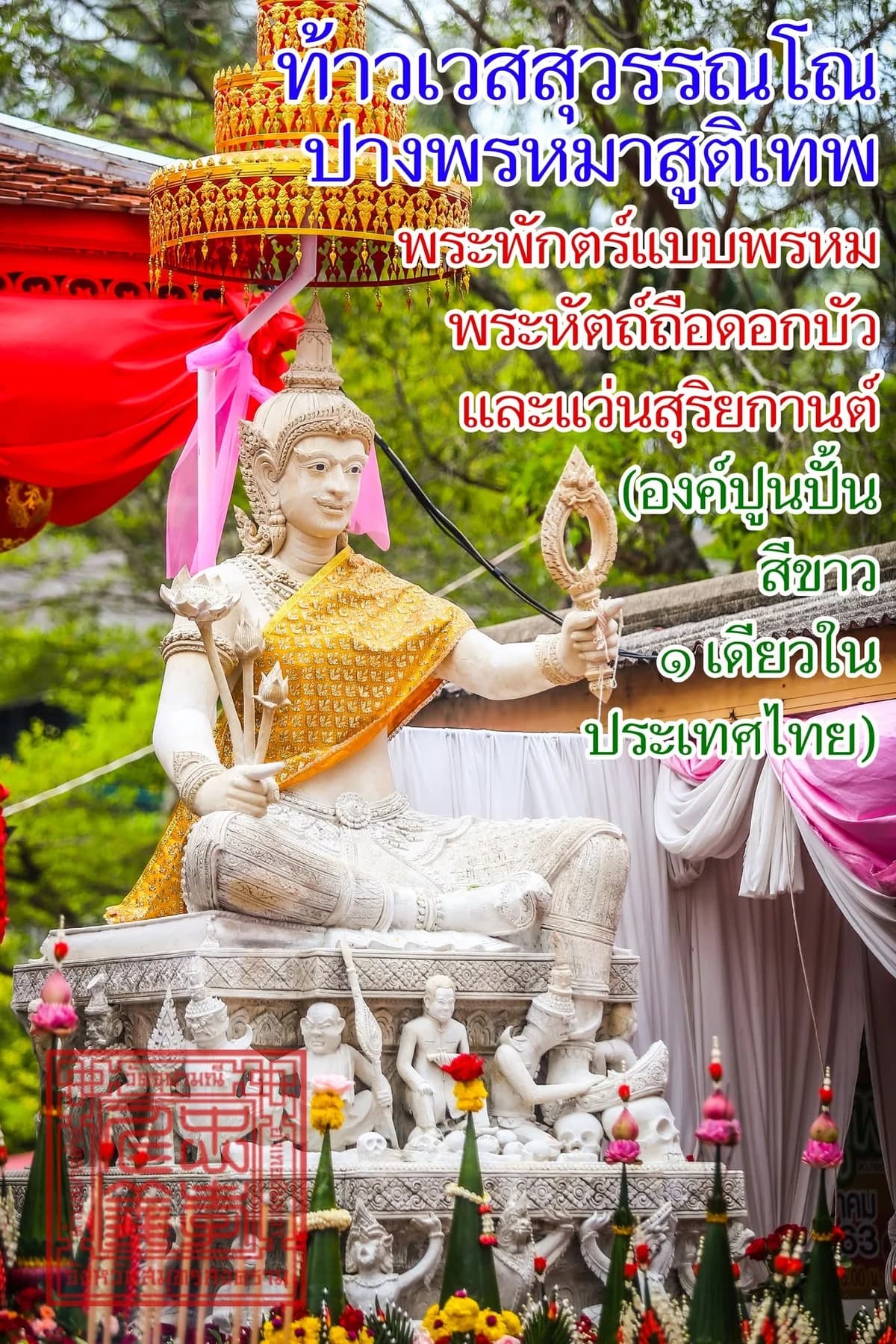
Second — Tao Wessuwan as Deva-son (Tāvatiṃsa heaven)
This is Tao Wessuwan in the form of a deva-son, dwelling in the Tāvatiṃsa heaven, the realm above the Cāturmahārājika.
Body: golden
Raiment: red
This deva-son form is resplendent with a golden body and red raiment — red being the color of power and love. Devotees often pray here for love, a partner, the fulfillment of wishes, and loving-kindness and charm.
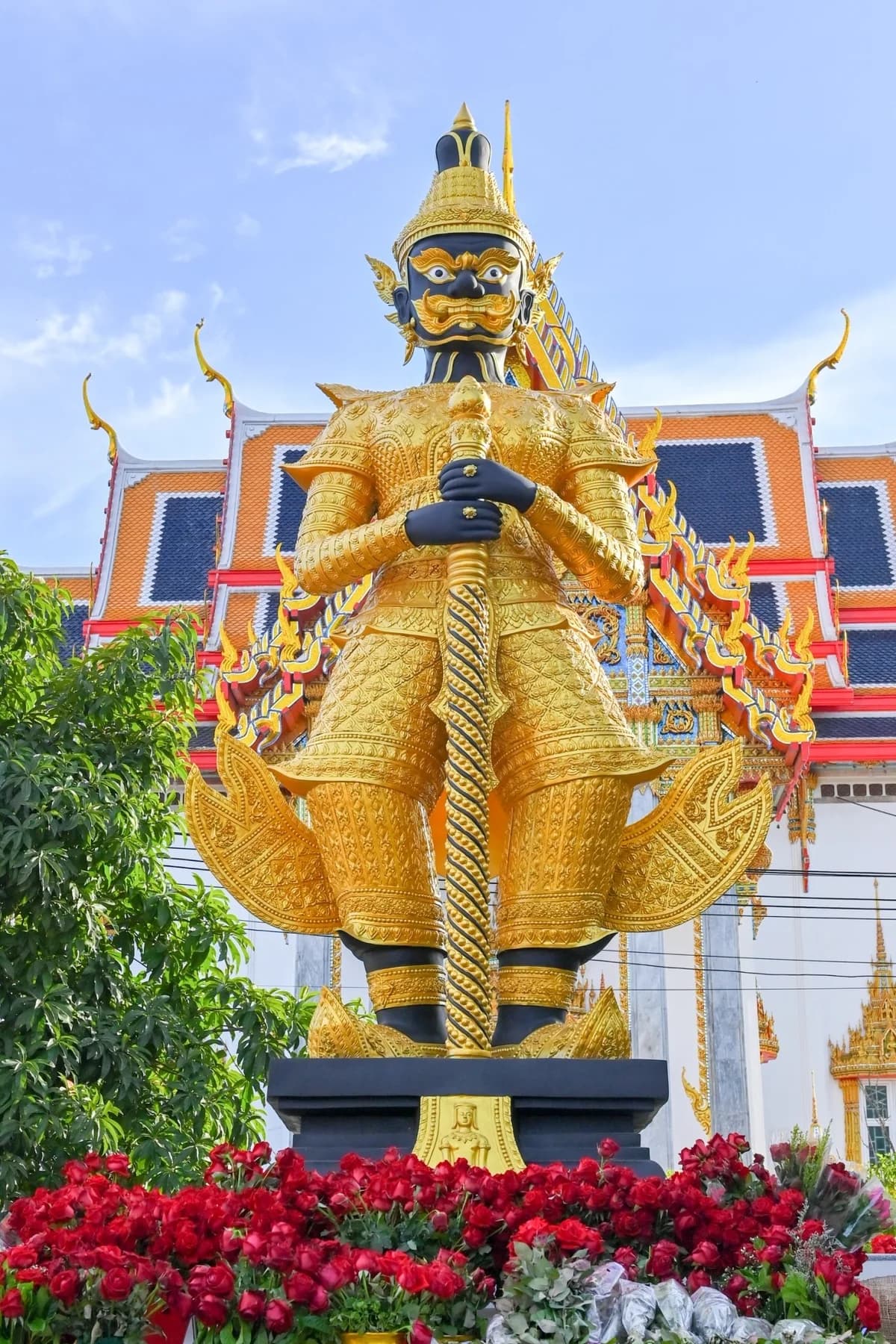
Third — Tao Wessuwan as Heavenly King (Cāturmahārājika heaven)
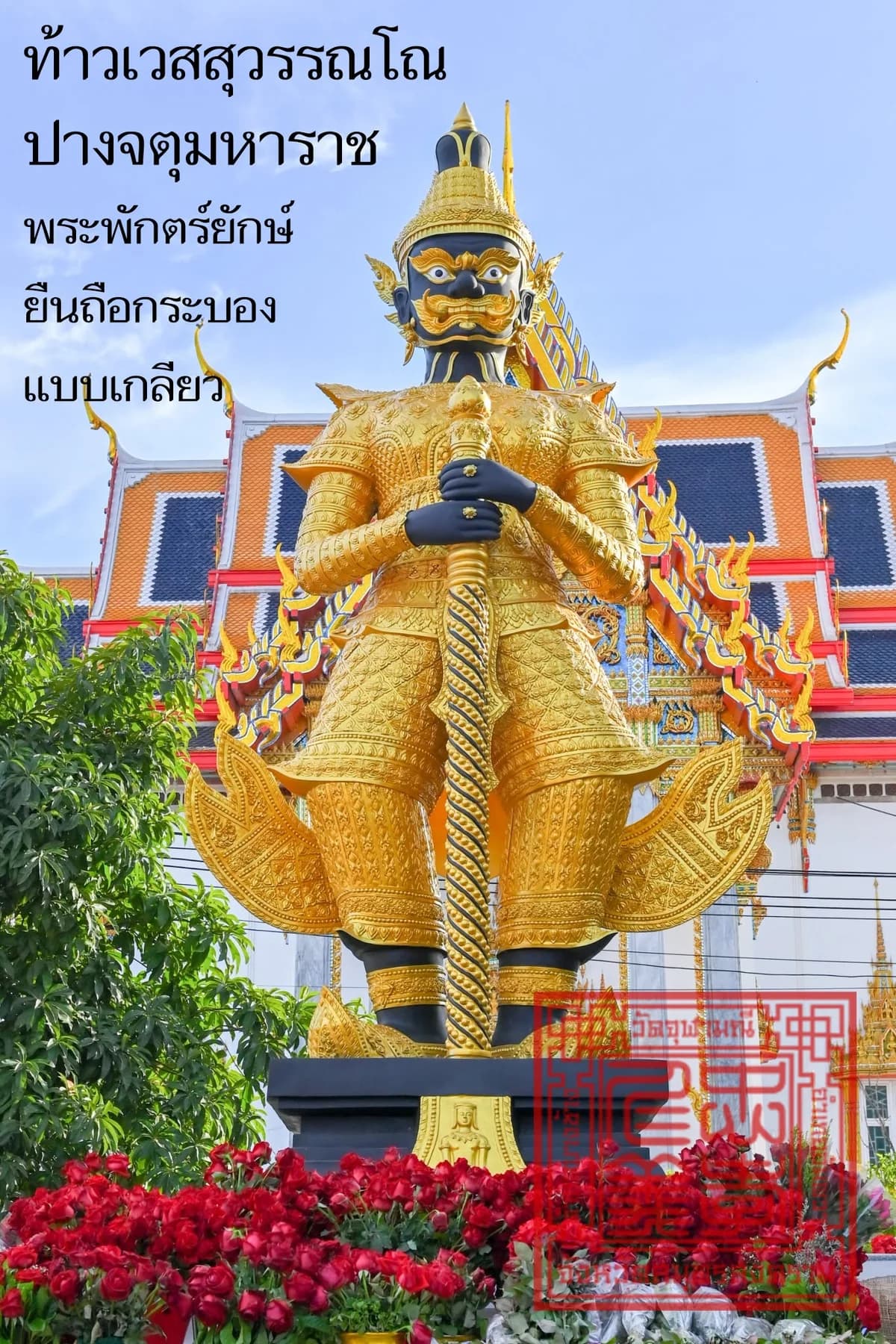
This is the form most familiar to Thai people: the yaksha form, as one of the Four Heavenly Kings who govern the Cāturmahārājika heaven, and as lord of the yakshas.
Body: green or black
Raiment: green
In this form he appears as a mighty yaksha with an awe-inspiring face, holding a mace (cudgel) of immense power. This manifestation is foremost in dispelling evil and granting safety from harm. Those facing misfortune, curses, black magic, or unexplained illness most often come to pay homage to Tao Wessuwan in this yaksha form.
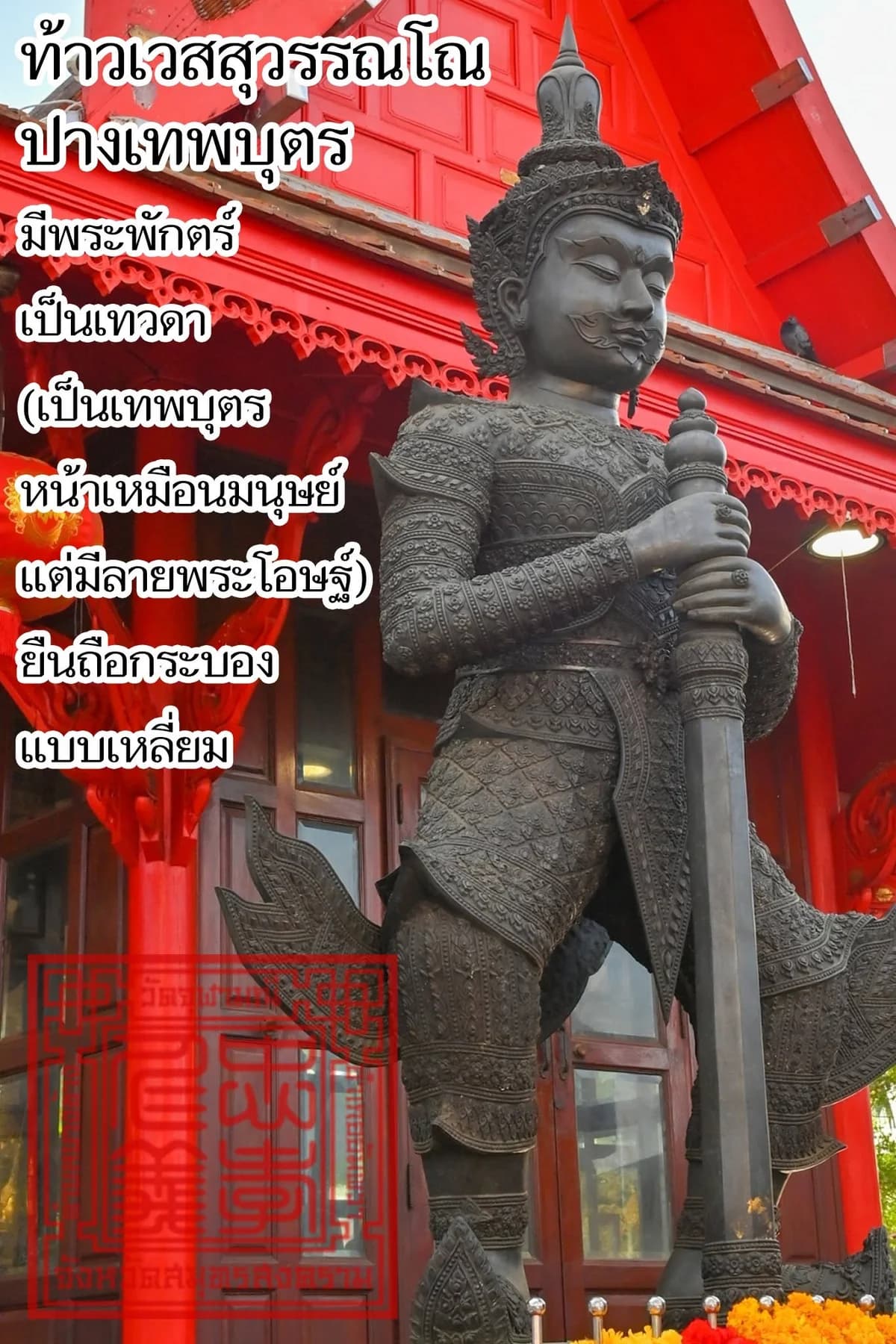
Fourth — Tao Wessuwan in Human Form
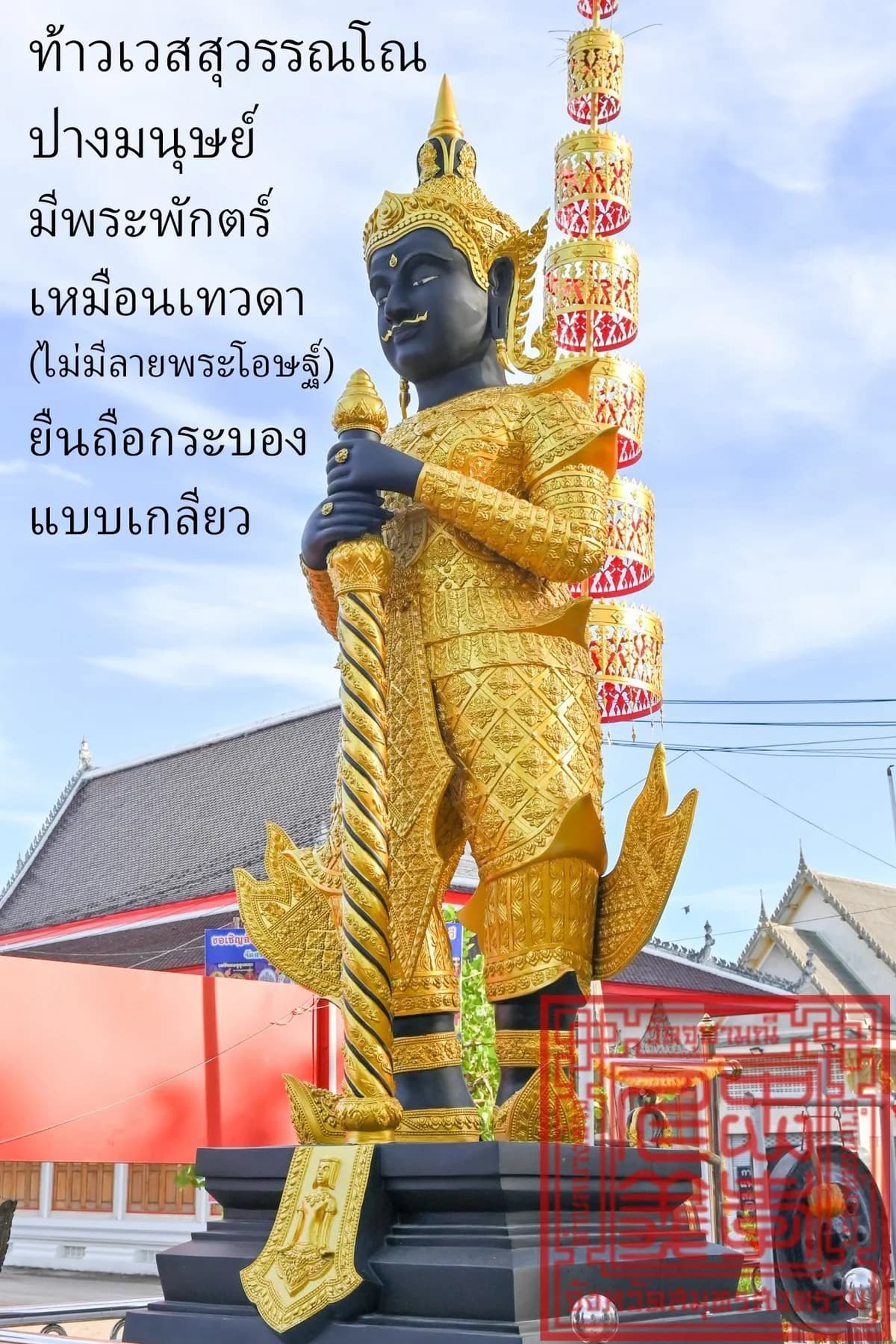
The final form is Tao Wessuwan appearing as a human — not as an awe-inspiring yaksha or radiant deva, but as an ordinary man.
This human form conveys closeness to humankind and his descent to help and support people in the world. It also reminds us that the path from a human being who practices giving and goodness (as in the story of Kubera the brahmin) can lead to becoming a great deity — an example of a life devoted to virtue and perseverance.
Documentary Video
The television program "Bantuek Lap Lap" (Mysterious Chronicles) on the legend of Tao Wessuwan.
The Mantra of Veneration
Preparing the Offerings
9 incense sticks
9 red roses
Before chanting, settle the mind and recollect the qualities of the Triple Gem and those to whom you owe gratitude, in this order:
Recite Namo three times
Recollect the Buddha, the Dhamma, the Sangha
Recollect your father and mother
Recollect your teachers
Then begin the mantra of veneration with a humble and steadfast mind.
นะโม ตัสสะ ภะคะวะโต อะระหะโต สัมมาสัมพุทธัสสะ (๓ จบ)
Homage to the Blessed One, the Worthy One, the Perfectly Self-Awakened One.
ปุตตะ กาโม ละเภ ปุตตัง ธะนะกาโม ละเภ ธะนัง อัตถิ กาเย กายะญายะ เทวานัง ปิยะตัง สุตตะวา อิติปิ โส ภะคะวา ยมมะราชาโน ท้าวเวสสุวรรณโณ มะระณัง สุขัง อะหัง สุคะโต นะโมพุทธายะ ท้าวเวสสุวรรณโณ จาตุมะหาราชาชิกา ยักขะพันตา ภัทภูริโต เวสสะ พุสะ พุทธัง อะระหัง พุทโธ ท้าวเวสสุวรรณโณ นะโมพุทธายะ
The translation and commentary are divided into three parts — read on below.
Translation and Commentary
For deeper understanding, this mantra can be divided into three main parts:
Part 1 — A Blessing and the Care of Body and Mind
“Putta kāmo labhe puttaṃ / Dhanakāmo labhe dhanaṃ / Atthi kāye kāyañāya / Devānaṃ piyataṃ sutavā”
Translation: One who desires children may obtain children; one who desires wealth may obtain wealth. The wise have heard that being beloved of devas and humans dwells within the body (of one who knows how to care for body and mind), for it can be realized through the body itself.
Commentary: This is not a transactional "asking," but a teaching for the heart: that fulfilling our wishes — whether for children or wealth, and being beloved of devas and humans — all rests upon the foundation of knowing how to care for one's own body and mind, behaving well and with virtue. One who carries oneself gracefully is naturally beloved and draws good things into life.
Scholarly note: This passage is in fact a preamble often chanted before the "Jinapañjara" gāthā of Somdet Phra Phutthachan (To Phrommarangsi). Pali scholars observe that it was added by later devotees, and that only the first two lines are grammatically complete Pali; the latter lines are verse-like and require interpretation. It should therefore be chanted with understanding of its meaning rather than mere belief in its potency.
Part 2 — Recollecting Truth and the Buddha's Qualities
“Itipi so bhagavā yamarājāno / Tao Wessuwanno / Maraṇaṃ sukhaṃ ahaṃ sugato / Namo Buddhāya”
Translation: Even by this reason, the Blessed One (free from defilements, worthy of veneration) has affirmed: Yama the king of death is real, Tao Wessuwan is real, death is real, and happiness too is real. I, faring well, pay homage to the Buddha.
Commentary: This part borrows the structure of the "Itipi so bhagavā" verse praising the Buddha's qualities to affirm reality according to Buddhist cosmology: that Yama (lord of death and justice), Tao Wessuwan, and death all truly exist. The phrase "maraṇaṃ sukhaṃ" (death, happiness) also points to maraṇānussati — the constant recollection of death — by which one who lives well can meet death at ease. And "Namo Buddhāya" is the heart of the Five Buddhas (Na-Mo-Phut-Tha-Ya), a most powerful verse of homage and protection, signifying that ultimately all must return to the Triple Gem as refuge.
Part 3 — Invoking and Praising Tao Wessuwan
“Tao Wessuwanno cātumahārājikā / Yakkhabantā bhaṭbhūrito / Vessa busa buddhaṃ arahaṃ buddho / Tao Wessuwanno namo Buddhāya”
Translation: Tao Wessuwan, the great lord in the Cāturmahārājika heaven, lord of the yakshas, endowed with auspiciousness and vast wisdom (vessa busa — sacred syllables): homage to the Buddha, the Worthy One, the Awakened One. O Tao Wessuwan, I pay homage to the Buddha.
Commentary: This part is in the style of a master-monk's gāthā, blending Pali with potent phrases. The words "vessa busa" are bīja-mantra (sacred syllables) aimed at the power of sound rather than grammatical sentence. Its essence is to invoke Tao Wessuwan in his role as the great king of the North and lord of the yakshas for protection. But its most beautiful point is that the whole mantra ends once more with "Namo Buddhāya," reaffirming that however mighty Tao Wessuwan may be, he is a deity who protects the Dhamma and humbles himself beneath the Triple Gem — not above the Buddha, the Dhamma, and the Sangha.
Closing
Tao Wessuwan is not merely a "god of riches" or a "yaksha who drives off ghosts" as commonly understood. He embodies several profound virtues: the fruit of the generosity accumulated by Kubera the brahmin, the guardian of Buddhism by his pledge in the Āṭānāṭiya Sutta, and an example of one who rose from a human of good deeds to greatness in the heavens.
Thus the right way to venerate Tao Wessuwan rests on understanding that all power and wealth arise from good conduct, giving, and keeping body and mind beautiful — not merely from asking for supernatural favors. And we should always recall the teaching of the Buddha that, in the end:
“Attā hi attano nātho”
Venerating the sacred is a means of inclining the mind toward strength and mindfulness, but true success arises above all from doing good through one's own effort.
Note: This article is compiled from both Buddhist and Brahmanic–Hindu beliefs, with the framework of the "Four Manifestations of Tao Wessuwan" following the images enshrined at Wat Chulamanee, Amphawa, Samut Songkhram. Some details may vary by school and text.