
Sacred amulets
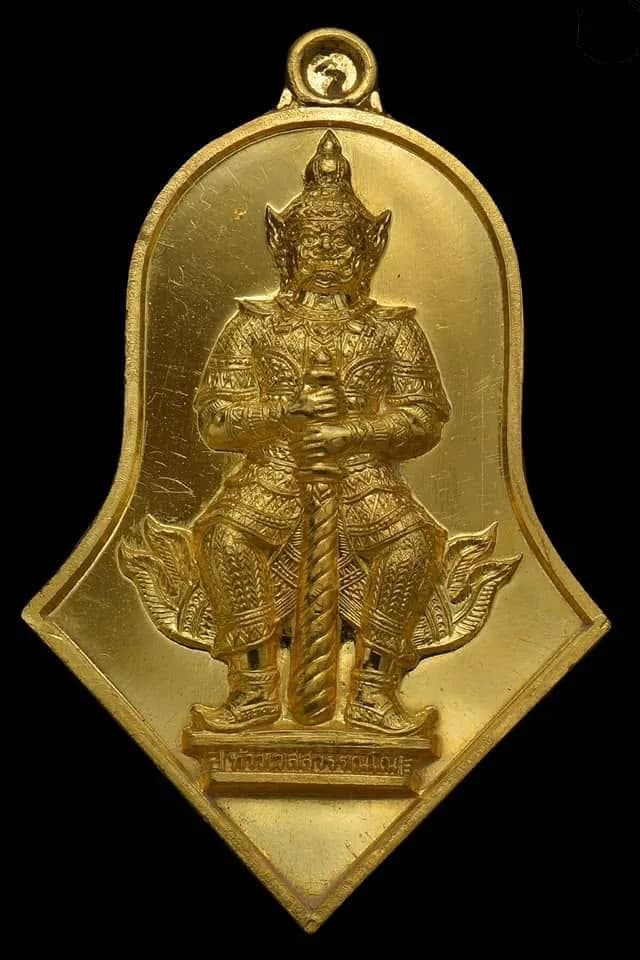
Past editionTao Wessuwan Amulet Medal — Champi Pattern, B.E. 2545 (2002)
B.E. 2545
A stamped Champi-pattern medal of Luang Pho Itthi (Bhaddacaro) — a renowned medal of proven experience from Wat Chulamanee, blending sacred consecrated alloy with a long empowerment.
The Tao Wessuwan medal in the Champi pattern of the Buddhist year B.E. 2545 (2002 CE) — which disciples affectionately call the "Champi Medal" — is a sacred object whose creation was conceived by the abbot Phra Khru Sophitwiriyaphon (Itthi Bhaddacaro) of Wat Chulamanee, and which is held in the highest esteem among disciples both Thai and foreign. It has been spoken of as a "medal of proven experience," owing to its divine power and the beauty of the medal, until it became a legend among the Tao Wessuwan medals of Thailand.
The Champi Medal in Its Various Metals
This edition of the Champi medal was cast in several metals — pure gold, silver with red enamel, pure silver, navaloha alloy, copper, and lead. The following set of images records the beauty of Tao Wessuwan on the medal across these various metals.
Gold
Silver with enamel
Silver
Nawaloha
Copper
Lead
Silver-gilt with enamel (blue enamel)
Silver-gilt with enamel (red enamel)
The Origin of the Tao Wessuwan Image at Wat Chulamanee
Tao Wessuwan, also known as Kubera, is the lord of the yakkhas and one of the Four Heavenly Kings who guard the north. In Buddhism a legend of the protective chants relates that the Four Heavenly Kings composed the "Āṭānāṭiya Sutta" and offered it to the Lord Buddha, so that monks and novices might chant it to guard against spirits, demons, and wrong-viewed deities during their meditation practice. For this reason the masters of old were fond of making charms, carved images, and yantra cloths in the form of Tao Wessuwan, distributing them to lay devotees to ward off dangers.
Mindful of the special virtues of Tao Wessuwan, who sustains Buddhism and protects the faithful, Luang Pho Itthi first created and distributed Tao Wessuwan medals to lay devotees from the Buddhist year B.E. 2532. He also undertook to cast a large likeness of Tao Wessuwan enshrined within the temple, performing the gold-pouring rite on 15 July B.E. 2532, which today is renowned for its sacred power — those who come to make vows have their wishes fulfilled in nearly every case.
The Champi Medal of B.E. 2545
Among all the Tao Wessuwan sacred objects whose creation Luang Pho Itthi conceived, the stamped medal in the Champi shape of the Buddhist year B.E. 2545 is the most beloved edition. He devoted the greatest care to its making — both in the sacred materials of the old consecrated alloy, and in his own long mind-empowerment chanting — until, confident of its potency, he released it for veneration and distribution. One portion was offered for veneration in order to raise funds for the restoration of Wat Chulamanee, while another portion he distributed to those who revered him.
Luang Pho Itthi's words
"Empowered until it was packed full, empowered until no more could go in."
With the experiences of those who took it to venerate, made evident both in good fortune and in deliverance from accidents in case after case, this edition became all the more famous and widely known. Some of the medals also bear sacred yantra script inscribed in Luang Pho's own hand, which he kindly sat and inscribed for those who asked, untiringly, divided into small inscribed script and large inscribed script.
The Method of Creation
Luang Pho Itthi's creation of each edition of sacred objects has always followed a meticulous standard. It begins with gathering sacred alloy and materials from many holy places, including medals and charms of past masters. Once enough sacred materials had been gathered, they were sent to a factory to be rolled into sheets, brought back to undergo "the rite of blessing the alloy" at the temple first, and only then taken back to be stamped into medals. When all the medals had been delivered to the temple, he would calculate the auspicious times to hold the Buddhābhiseka consecration rite at least 5–7 times; some editions were empowered over many years before being released for veneration. Every step was carried out with the utmost refinement, as he always remarked:
The abbot's resolve
"Something people will hang around their necks — never make it carelessly or half-baked."
Each Buddhābhiseka consecration rite was held on a grand scale, with both the Buddhist rite and the Brahmin rite, inviting guru masters from all directions to join in the empowerment many times over, until — confident of its potency — it was released for veneration.
The Sacred Alloy and Materials
The first batch of alloy for the Champi medal came from the gold-pouring rite for the likeness of Luang Pho Nuang (Kowitho), the famed "Red Holy Water" edition of Wat Chulamanee. Later, at the gold-pouring rite for the likeness of Luang Pho Nuang, the "Holding the Rosary" edition of the Buddhist year B.E. 2529, guru masters joined the Buddhābhiseka, namely:
Luang Pho Phrom, Wat Khanon Nuea
Luang Pu Du, Wat Sakae
Luang Pho Huan, Wat Phutthaisawan
Luang Pho Mi, Wat Marawichai
Luang Pho Choen, Wat Khok Thong
Luang Pho Mian, Wat Pho Kop Chao
Luang Pu Thim, Wat Phra Khao
Luang Pho Phoem, Wat Pom Kaeo
Luang Pho Chaloem, Wat Phra Yat
Luang Pho Phin, Wat Ko Kaeo
Luang Pu Chuen, Wat Yan Sen
In this rite Luang Pho Itthi brought rolled copper sheets and copper wire to join the rite, as Luang Pho Nuang had instructed be kept for making alloy. He also brought 50 kilograms of pure granular copper into the rite, and cut copper bars into pieces for the guru masters to anoint and inscribe as alloy, with the guru masters joining in blessing the alloy as follows:
Luang Pho Chuen, Wat Yan Sen
Luang Pu Chop
Luang Pho Di, Wat Phra Rup
Luang Pho Khom, Wat Phai Rong Wua
Luang Pho Uttama, Wat Wang Wiwekaram
Luang Pho Lamyai, Wat Thung Lat Ya
Luang Pho Yueang, Wat Thung Lom
Luang Pho Nu, Wat Wang Sala
Luang Pu Phaeo Pavaro
Luang Pu Liu, Wat Rai Taeng Thong
Luang Pu Yaem, Wat Sam Ngam
Luang Pho Poen, Wat Bang Phra
Luang Pho Chaem, Wat Don Yai Hom
In addition, he gathered the 108 yantra sheets from Ajarn Thep Sarikabut, 10 sets (which were exceedingly hard to obtain in those days), together with 14 other yantra sheets, and alloy from the gold-pouring of the Phra Kring Thewabodi (B.E. 2535) and the Phra Kring Weluwan, his legendary votive bell-images, into which had been gathered and fused the alloy of a great many medals of renowned masters.
Alloy from Masters' Medals (Copper Material)
Alloy of the Phra Kring Yanawitthayakhom, Luang Pho Khun, Wat Ban Rai
Alloy of the Phra Kring Chinabanchon
Alloy of the Phra Kring Suchinno, Luang Pu Waen
Phra Kring of Luang Pu To
Medals of Luang Pu To, "Lo Maek" edition (2 medals)
Medal of Luang Pu To, with the Tri yantra on the reverse
Phra Kring Kitthewo, Luang Pho Phrom, Wat Khanon Nuea
Phra Kring of Luang Pho Thong Yu Suthathikari
Kaiser medal of the Supreme Patriarch
Medal of Luang Pho Khong, Wat Bang Kaphom, B.E. 2484
Medal of Luang Pho Khong, Wat Bang Kaphom, "Pat Tan" edition (2 medals)
First-edition medal of Luang Pu Chai, Wat Sadet (3 medals)
Medal of Luang Pho Chui, Wat Khongkha
First-edition medal of Luang Pho Khun, Wat Ban Rai
First-edition medal of Luang Pho Daeng, Wat Khao Bandai It
Medal of Luang Pho Daeng, Wat Khao Bandai It, "Maethap" edition, gold material
Medal of Luang Pho Daeng, Wat Khao Bandai It, "Maethap" edition, silver material
Medal of Luang Pho Daeng, Wat Khao Bandai It, "Maethap" edition, copper material
Medal of Luang Pho Daeng, Wat Khao Bandai It, "Bot Lan" edition
Medal of Luang Pho Sut, Wat Kalong, "Suea Phen" edition
First-edition medal of Luang Pho Phoem, Wat Klang Bang Kaeo
Medal of Phra Khru Panyachotiwat (3 medals)
Medal of Luang Pho Pha, Khon Kaen
Medal of Luang Pho Phae
Medal of Luang Pho Chuan
Medal of Luang Pho Huat
Medal of Luang Pho Choi, Wat Si Uthumphon
Medal of Luang Pho Doem, "Kon Maeng Sap" (cockroach base)
Medal of Luang Pho Kan, "Sian Tong" pattern
Medal of Phra Mongkhon Bophit, with the numeral 1 yantra on the reverse
Medal of Phra Mongkhon Bophit, B.E. 2495
Medal of Wat Phanan Choeng
Medal of Luang Pho Chong, Wat Natang Nok, large-face pattern
Medal of Luang Pho Pan, Wat Bang Nom Kho
Medals of Luang Pho Mian, Wat Pho Kop Chao, all editions
Medal of Luang Pho Phrom, Wat Khanon Nuea, "Kro Phet" (diamond armor) yantra
Medal of Luang Pho Khammi, Wat Tham Khuha Sawan, B.E. (year) 17
Medal of Luang Pho Phring, Wat Kong Thanu (2 medals)
First-edition medal of Luang Pho Ngoen, Wat Don Yai Hom
Medal of Luang Pho Noi, Wat Thammasala
Medal of Luang Pho Nak, "Military Academy" edition
Medal of Luang Pu Du, "Poet Lok" edition
Medal of Luang Pu Si, Wat Sakae
Medal of Luang Pho Chaem, Wat Pa Mok
Medal of Luang Pho Sai, Wat Thong Khung
Medal of Luang Pho Klan, Wat Inthrawat
Medal of Luang Pho Kham, Wat Pho Pan
Medal of Luang Pho Rung, Wat Pang Chak
Medal of Luang Pho Di, Wat Phra Rup
Medal of Luang Pho Khom, Wat Phai Rong Wua
Sema medal of Luang Pho Mui, Wat Don Rai
Medal of Luang Pho Daeng, Wat Thung Khaya
Medal of Luang Pho Lamyai, "5 Keji" edition
Medal of the Reclining Buddha, Phra Thaen Dong Rang
Medal of Luang Pho Sai, Wat Tha Khanun
"Nak Kiao" medal, Wat Tri Chinda (400 medals)
"Four Noble Truths" medal of Luang Pho Chai, Wat Sadet
Medal of Luang Pho Suea, Wat Bang Waek, B.E. 2519
Medal of B.E. (year) 15, Wat Rakhang Khositaram
Medal of Luang Pho Chaem, Wat Chalong
Medal of Luang Pho Thip, Buri Ram
Medal of King Naresuan, B.E. (year) 15
Medal of King Naresuan, 2nd edition
Somdej Nang Phaya, nawaloha material (3 images)
Medals of Luang Pu Ti, Wat Luang, nearly all editions
Medal of the Maha Chakkraphat rite, Phitsanulok (400 medals)
Medal of Luang Pho Suea, Wat Bang Waek
Medal of Luang Pho Seng, Wat Kanlayanamit
Medal of Luang Pho Kluai, Wat Mu Dut
Medal of Luang Pho Khong, Wat Wang Sapparot
Medal of Luang Pu Thim, Wat Lahan Rai, "Charoen Phon Bon" edition
Medal of Luang Pu Thim, Wat Lahan Rai, "Charoen Phon Lang" edition
Medal of Luang Pu Plian, Wat Tai
Medal of Luang Pho Yathan Suan
Medal of Luang Pu Wan
Medal of Luang Pu Khao, Wat Tham Klong Phen
First-edition medal of Luang Pho Chop
Medal of Luang Pu Fan
Medals of the Supreme Patriarch (Yu) (2 medals)
Medal of Luang Pho Thammachak, Wat Bang Lam Mun
Medal of Luang Pho Kasem Khemako, "Taeng Mo" (watermelon) edition
Medal of Luang Pho Kasem Khemako, "Sum Rakhang, Sitting Holding the Alms Bowl" edition
Medal of Luang Pho Kasem Khemako, "Sitting with Raised Knee" edition, B.E. (year) 17 (200 medals)
Medal of Luang Pho Ki, Wat Hu Chang
Medal of Luang Pu Soi Thammaroso, Wat Liap Rat Bamrung
Medal of Luang Pho Suang
Medal of Luang Pho Rian, Wat Bang Rahong
Medal of Luang Pho Ophasi
Medals of Wat Phra Kaeo, 1st edition and 2nd edition
Phra Kring Ayothaya
Phra Poet Lok
Medals from every temple in Samut Songkhram Province, both silver and copper material (including gold material weighing 85 baht)
Alloy from Buried Amulets and Takrut (Lead Material)
Alloy of the Phra Tha Kradan, Si Sawat crypt, Kanchanaburi
Alloy of the Wat Thewa Sangkharam crypt amulets, Kanchanaburi
Alloy of the lead Phra Ruang, Wat Phra Thaen Dong Rang crypt, Kanchanaburi
Alloy of the Phra Tha Kradan, Wat Si Loha, Kanchanaburi
Phra Pidta of Luang Pu Rian, Wat Nong Bua
Crypt amulets, Wat Dong Sak, Kanchanaburi
Phra Kamphaeng Sok, Luang Pho Khom, Wat Phai Rong Wua, Suphan Buri
First-edition Phra Kamphaeng Sok, Luang Pu Di, Wat Phra Rup
Phra Rao Thian, Wat Intharam, Talat Phlu, Bangkok
Lead alloy, the Phra Pru Nang pattern, the Ngop Nam Oi pattern, and the Phra Khong pattern, Luang Pho Niam, Wat Noi, Suphan Buri
Lead Maha Rangap takrut, Luang Pu Iam, Wat Pak Lat, Samut Songkhram
Phra Kamphaeng Sok and Phra Yot Tho, Wat Phra Si Mahathat crypt, Suphan Buri
Lead Phra Pidta, Wat Hin Laem, Thong Pha Phum, Kanchanaburi
Lead Nom and Phra Tha Kradan, Luang Pho Lamyai, Wat Thung Lat Ya, Kanchanaburi
Maha Prap takrut, Luang Pho Nuang, Wat Chulamanee, Samut Songkhram
Takrut of Luang Pho Khong, Wat Bang Kaphom, Samut Songkhram
Lead amulets of Luang Pho Thaen, Wat Thamma Sen, Ratchaburi
Takrut of Luang Pho Phit, Wat Khamang, Phichit
Phra Tha Kradan Noi, Wat San Chao crypt, Ratchaburi
Phra Praphamonthon, Luang Pu Suk, Wat Hua Hat, Chai Nat
Phra Ruang, Wat Luang crypt, Bang Phae, Ratchaburi
Lead amulets of Luang Pho Choi, Wat Bang Chang Nuea, Nakhon Pathom
Phra Rot, Wat Nong Mon, Lop Buri
Phra Yot Khun Phon, Sema Sam Chan crypt, Phetchaburi
Lead Phra Ruang, Lop Buri
Phra Somdej Lead "Tham Cha," Luang Pu To, Wat Pradu Chimphli, Bangkok
Medal of Luang Pho Sa-nga, Wat Nong Muang, Photharam, Ratchaburi
Lead amulets of Luang Pho Charun, Wat Chaloem At, Ratchaburi
With these rare alloys and sacred materials, combined with hundreds of grand Buddhābhiseka consecration rites, arose the "medal of proven experience" that has been spoken of until it became a legend of supreme sacred power.
The Number Produced
Pure gold material — 80 medals
Silver with red enamel — 500 medals
Pure silver material — 500 medals
Nawaloha material — 500 medals
Copper material — 150,000 medals
Lead material — 150,000 medals
Sacred-powder material — 150,000 medals
The Yantra on the Reverse — the Tao Wessuwanno Seal Yantra (3-7-9)
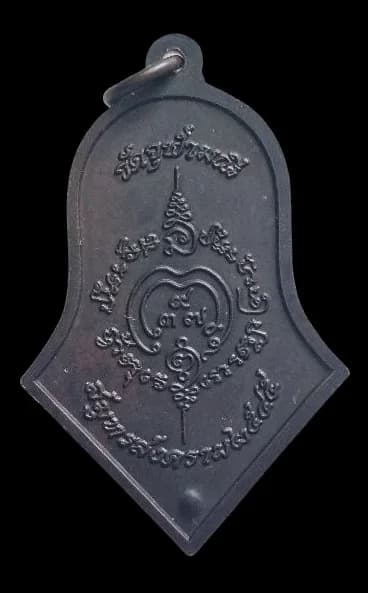
Many wonder what the yantra on the reverse of the Tao Wessuwanno medal of B.E. 2545 from Wat Chulamanee is. This yantra is called the "layered-Buddha yantra," the Tao Wessuwanno seal, and within it is concealed a most auspicious meaning. The numerals 3, 7, 9 that appear at the center of the yantra carry these meanings:
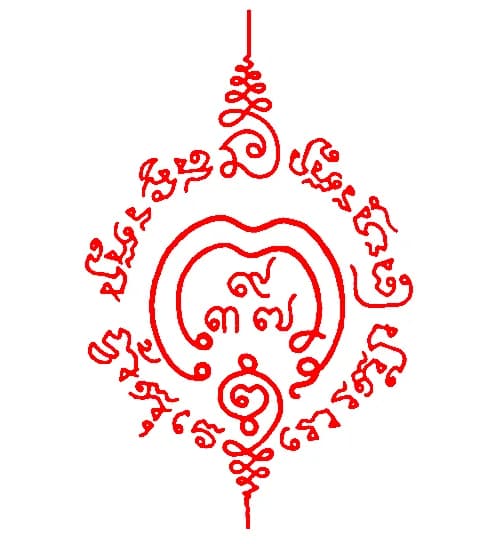
The Numeral 3 — the Triple Gem
The numeral 3 refers to the Triple Gem, the Three Jewels, namely: the Buddha, the Dhamma, and the Sangha.
The Numeral 7 — the Seven Factors of Enlightenment
The numeral 7 refers to the Seven Factors of Enlightenment (Satta Bojjhaṅga), the qualities that are factors of enlightenment, the practices that bring knowledge and liberation to fulfillment, reaching the utmost end of suffering. There are seven, supporting one another in sequence, as follows:
Sati-sambojjhaṅga (Mindfulness) — recollectedness, keeping mindfulness present in body, feelings, mind, and dhammas, without lapse (developed from the Four Foundations of Mindfulness).
Dhammavicaya-sambojjhaṅga (Investigation of Dhamma) — the examining, selecting, and considering of dhammas with wisdom (wise attention), giving rise to true knowledge and understanding.
Viriya-sambojjhaṅga (Energy/Effort) — diligence, the firm perseverance in practice and in considering dhammas, without discouragement or despondency.
Pīti-sambojjhaṅga (Rapture) — the joy and refreshment of mind, free of worldly enticement, arising from considering dhammas with effort.
Passaddhi-sambojjhaṅga (Tranquility) — the calm of body and mind, the easing that arises when rapture subsides.
Samādhi-sambojjhaṅga (Concentration) — the steadiness of mind, undistracted and unscattered, right concentration for the sake of insight.
Upekkhā-sambojjhaṅga (Equanimity) — placing the mind in balance, knowing things as they are and then letting go, clinging neither to good nor to bad, by the strength of mindfulness, concentration, and wisdom.
Whoever cultivates these seven qualities abundantly brings knowledge and liberation to fulfillment, reaching the utmost end of suffering.
The Numeral 9 — the Nine Virtues of the Sangha
The numeral 9 refers to the Nine Virtues of the Sangha, the virtues of the monks who are of good conduct and right practice (referring to the four pairs, the eight kinds of noble ones). The first four virtues are for one's own benefit, while the latter five are for the benefit of others. There are nine, as follows:
Supaṭipanno — of good practice (according to the Middle Way).
Ujupaṭipanno — of upright practice, not deceiving the world.
Ñāyapaṭipanno — of right and proper practice, in accord with the Dhamma.
Sāmīcipaṭipanno — of practice fitting to be honored.
Āhuneyyo — worthy of homage and of offerings.
Pāhuneyyo — worthy of hospitality.
Dakkhiṇeyyo — worthy of gifts (dakkhiṇā).
Añjalikaraṇīyo — worthy of reverential salutation.
Anuttaraṃ puññakkhettaṃ lokassa — the unsurpassed field of merit for the world.
The Language of the Yantra
The yantra script surrounding the seal signifies protection by the deities in three respects, namely:
Protection by Indra (Indra protects).
Protection by Brahma (Brahma protects).
Protection by Kubera (Tao Wessuwan protects).
A blessing
May whoever reads to the end flourish in moral virtue, in Dhamma, and in mindfulness and wisdom, and may auspiciousness abide throughout their whole being.
An anecdote of compassion
Once, someone brought medals for Luang Pho to inscribe in order to resell them. When a disciple raised an objection, he instead smiled good-naturedly and replied, "That's fine, let them go and sell. They'll have money to use, money to buy rice to eat, and perhaps they'll take the money they earn to support their father and mother too — it is meritorious." This reflects his boundless loving-kindness.
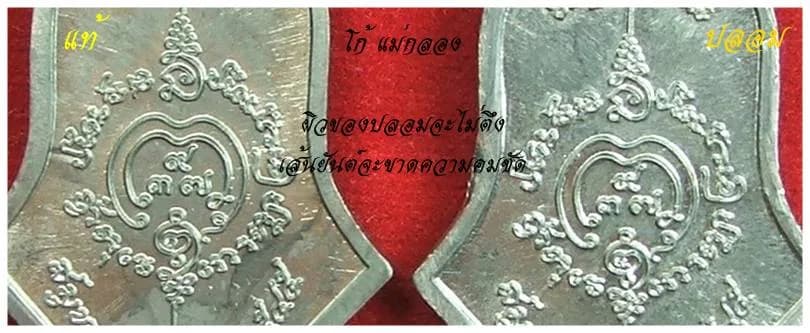
Examining the Genuine Lead Champi Medal (How to Spot a Fake)
Owing to the popularity of the lead Champi medal, counterfeits have appeared in two blocks. The first block bears no code mark — if no code is found, it can be judged not genuine at once — while the second block comes closer to the original and even includes a code. The points to observe are as follows:
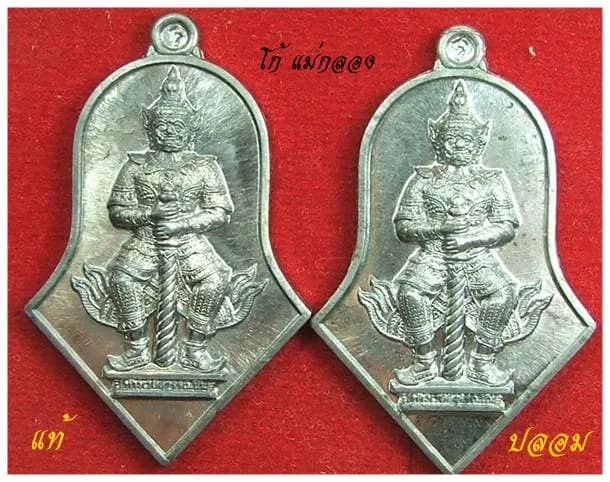
The eyes — on the right eye of Tao Wessuwan, the genuine is finely shaped, while the fake bulges
The surface — the genuine has a taut, even surface; the fake's surface is not taut
The reverse yantra — on the genuine the lines are crisp and the surface taut; on the fake the lines are blurred and the surface is not taut
The rim — the genuine is trimmed cleanly almost to the very edge; the fake is trimmed from both sides, meeting in the middle
The lead metal — the genuine is soft and can be bent by hand; the fake is hard and difficult to bend
Engraved Marks (Roi Jan) on the Lead Medal
Beyond the points above, some lead Champi medals were also inscribed by hand with sacred characters (roi jan) by Luang Pho Itthi himself — a distinctive feature that aids authentication. Because this edition grew popular, forged engravings later appeared on genuine medals. The set of images below was taken from a medal inscribed directly by Luang Pho Itthi, for comparing the true character of the engraved lines and the weight of the master's hand.
A word of caution
These observations are offered for educational purposes only. Please always exercise your own careful judgement when examining any sacred object, and kindly refrain from bending or handling another person's medal without permission.
Note: This content has been compiled from an article on the history of the creation (gathered in March B.E. 2559) and an article explaining the Tao Wessuwanno seal yantra (gathered in September B.E. 2562), in order to record the history and the auspicious meaning of this edition of the medal. It is in no way intended for any purpose of buying or selling.