
Sacred amulets
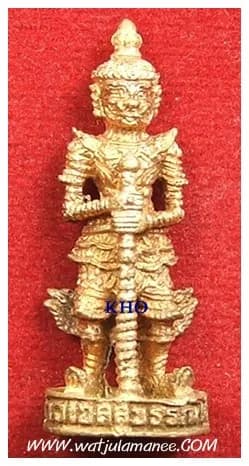
Past editionTao Wessuwan, First Edition, Wat Chulamanee, B.E. 2532 (1989)
B.E. 2532
The first-edition Tao Wessuwan sacred objects of Wat Chulamanee, created by Luang Pho Itthi in B.E. 2532. The casting rite was held on 29 December B.E. 2531 and the consecration rite on 15 July B.E. 2532, with nine guru masters joining in the empowerment.
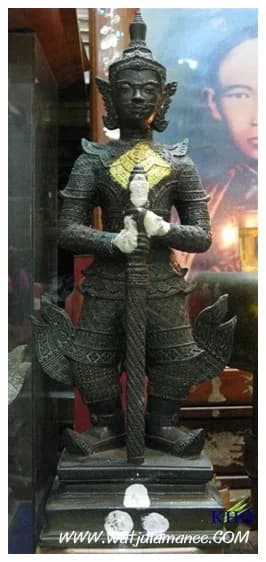
The first edition of Tao Wessuwan of Wat Chulamanee is the very first Tao Wessuwan sacred object that the abbot Luang Pho Phra Khru Sophitwiriyaphon (Itthi Bhaddacaro) resolved to create, in the Buddhist year B.E. 2532 — the same year in which he undertook to cast the great likeness of Tao Wessuwan enshrined within the temple. It marks the beginning of the renowned legend of the Tao Wessuwan sacred objects of Wat Chulamanee that has been handed down ever since.
Origin and Rites
The gold-pouring (casting) rite — 29 December B.E. 2531
The Buddhābhiseka consecration rite — 15 July B.E. 2532
Purpose — to raise funds for building the monks' living quarters (kuti) at Wat Daowadueng, Amphawa District, Samut Songkhram Province
Guru Masters Who Joined in the Empowerment
Luang Pho Sutham, Wat Khao Phra (presiding master of the casting)
Luang Pho Phaeo, Wat Tanot Luang
Luang Pho Chaem, Wat Don Yai Hom
Luang Pho Lamyai, Wat Thung Lat Ya
Luang Pho Uttama, Wat Wang Wiwekaram
Luang Pho Yot, Wat Kaeo Charoen
Luang Pho Ke, Wat Maenam
Luang Pho Wilai, Wat Pho Ngam
Luang Pho Udom, Wat Pathum
The Sacred Objects Created
| No. | Item | Number produced |
|---|---|---|
| Veneration size | ||
| 1 | Tao Wessuwan veneration image, 18 in. tall, deva countenance | 108 |
| Tao Wessuwan, free-standing (loi ong) figure | ||
| 2 | Consecrated alloy cast in the rite, straight-knee pattern | 300 |
| 3 | Gold, bent-knee pattern | by reservation |
| 4 | Gold, straight-knee pattern | by reservation |
| 5 | Silver, bent-knee pattern | 1,000 |
| 6 | Silver, straight-knee pattern | 1,000 |
| 7 | Alloy, bent-knee pattern | 10,000 |
| 8 | Alloy, straight-knee pattern | 10,000 |
| 9 | Thong thip (celestial gold), bent-knee pattern | 1,000 |
| Tao Wessuwan medal (seated-on-lotus pattern) | ||
| 10 | Gold | 80 |
| 11 | Silver | 216 |
| 12 | Bronze (thong) | 1,000 |
| 13 | Alpaca | 20,000 |
| Tao Wessuwan medal, tamarind-leaf pattern, raised yantra reverse, first edition (made B.E. 2533, released B.E. 2536) | ||
| 14 | Gold | 80 |
| 15 | Silver | 1,000 |
| 16 | Copper | 100,000 |
Photographs of Each Pattern
First-edition medal (Royal Mint block), alpaca material
First-edition medal (two code-stamps on the front, distributed at W.T. Samut Songkhram), alpaca material
Tao Wessuwan medal, gold
Tao Wessuwan medal, brass (aluminium bronze, coinage alloy)
Tao Wessuwan medal, alpaca (nickel alloy)
Tao Wessuwan medal, wood-mounted (for altar display)
Tao Wessuwan, consecrated alloy cast in the rite, straight-knee pattern
Tao Wessuwan, consecrated alloy cast in the rite, straight-knee pattern (2nd piece)
Tao Wessuwan, alloy material, straight-knee pattern
Tao Wessuwan, alloy material, straight-knee pattern (2nd piece)
Tao Wessuwan, alloy material, bent-knee pattern
Tao Wessuwan, alloy material, bent-knee pattern (2nd piece)
Tamarind-leaf medal, raised-yantra reverse, copper material
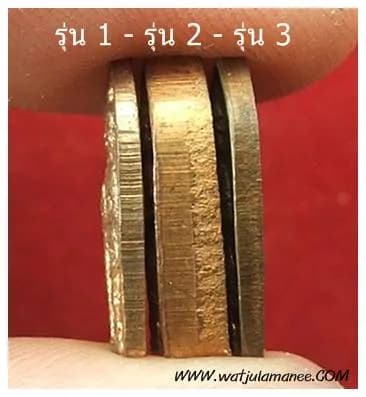
Tamarind-leaf medal of Wat Chulamanee — all three editions
The tamarind-leaf medal of Wat Chulamanee was issued in three editions in all. The first edition (raised-yantra reverse) was made in B.E. 2533 (1990); Luang Pho Itthi took it to be empowered at many places — both at Wat Chulamanee itself and at other temples where he sat in meditation vigil (nang prok).
Later, in B.E. 2536 (1993), a great consecration rite was held in the ordination hall of Wat Chulamanee. Luang Pho saw that the first-edition tamarind-leaf medal did not yet bear the temple's name, so he ordered a new reverse block bearing the temple name; but the factory struck it as a thick die, which consumed more consecrated alloy than usual — this became the second edition (with temple name, thick die). He then ordered it made once more, likewise bearing the temple name on the reverse but thinner than the second — this became the third edition (with temple name, thin die). All three editions were thus released for veneration together in B.E. 2536.
Furthermore, of this first-edition Tao Wessuwan set, apart from the gold pieces and the veneration images, Luang Pho Itthi gave most of the rest — more than 80 percent — to his disciples and to the general public.
Examining the Bent-Knee Free-Standing Figure (How to Spot a Fake)
The first-edition free-standing Tao Wessuwan figure in the bent-knee pattern of B.E. 2532 became so popular that counterfeits are now circulating, so it should be examined with care for your own safety. Here the genuine and the fake are presented side by side for comparison (in the photographs, the left figure is genuine and the right figure is fake).
The first and most important point to observe is the size of the figure — anyone who has owned a genuine piece will see that the size differs markedly: the genuine is larger than the fake. For the surface texture and other details of the casting, compare against the close-up images below.
A word of caution
These observations are offered for educational purposes only. Please always exercise your own careful judgement when examining any sacred object.
Note: This content has been compiled from an article recording the history of the creation of the sacred objects of Wat Chulamanee, in order to record the history of this edition. It is in no way intended for any purpose of buying or selling.