
A Chat About the Tua Pae Yi Pae — Decoding the Secret Meanings on the Medallion (EP.2)
Decoding the secret meanings of the Chinese characters and auspicious symbols on the Tua Pae Yi Pae medallion, which Luang Pho Itthi of Wat Chulamanee designed for the Sappharachen Foundation — the bat clutching coins, the White & Black Emissaries of Yama, and the Ariyasacca talisman-charm of Luang Pho Bao-oeng.
A Storytelling Note — A Chat About the Tua Pae Yi Pae: "When You Cannot Ask a Boon of Heaven Above, Come Ask It of Us" (EP.2)
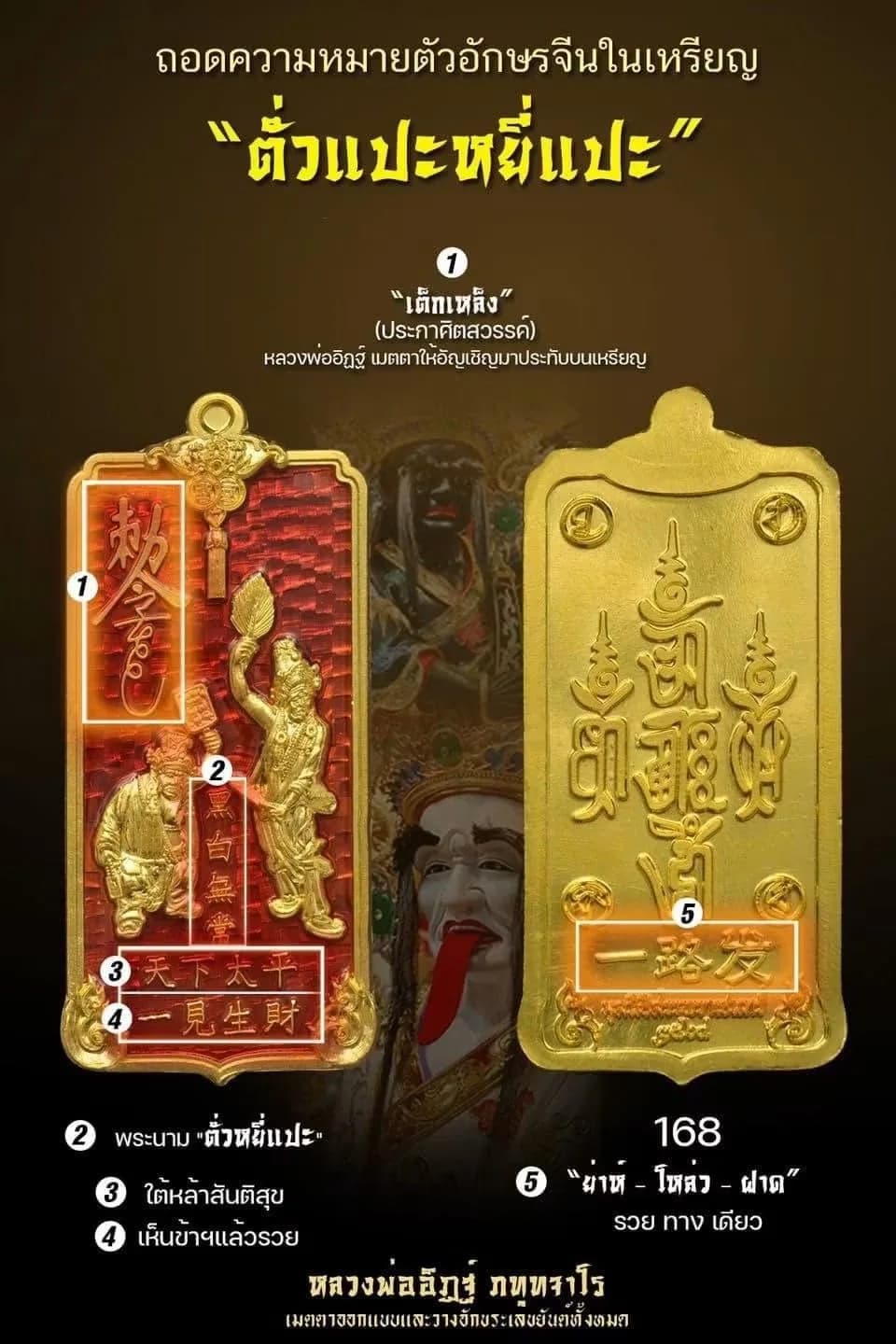
Decoding the Secrets in the Medallion
Today let us decode the secrets in the Tua Pae Yi Pae medallion, which was produced by the Sappharachen Foundation. When we consider the Chinese characters stamped upon the medallion, which Luang Pho Itthi of Wat Chulamanee graciously designed for it, I think there are implications and meanings that are truly good and profound. Let us consider them together, one at a time.
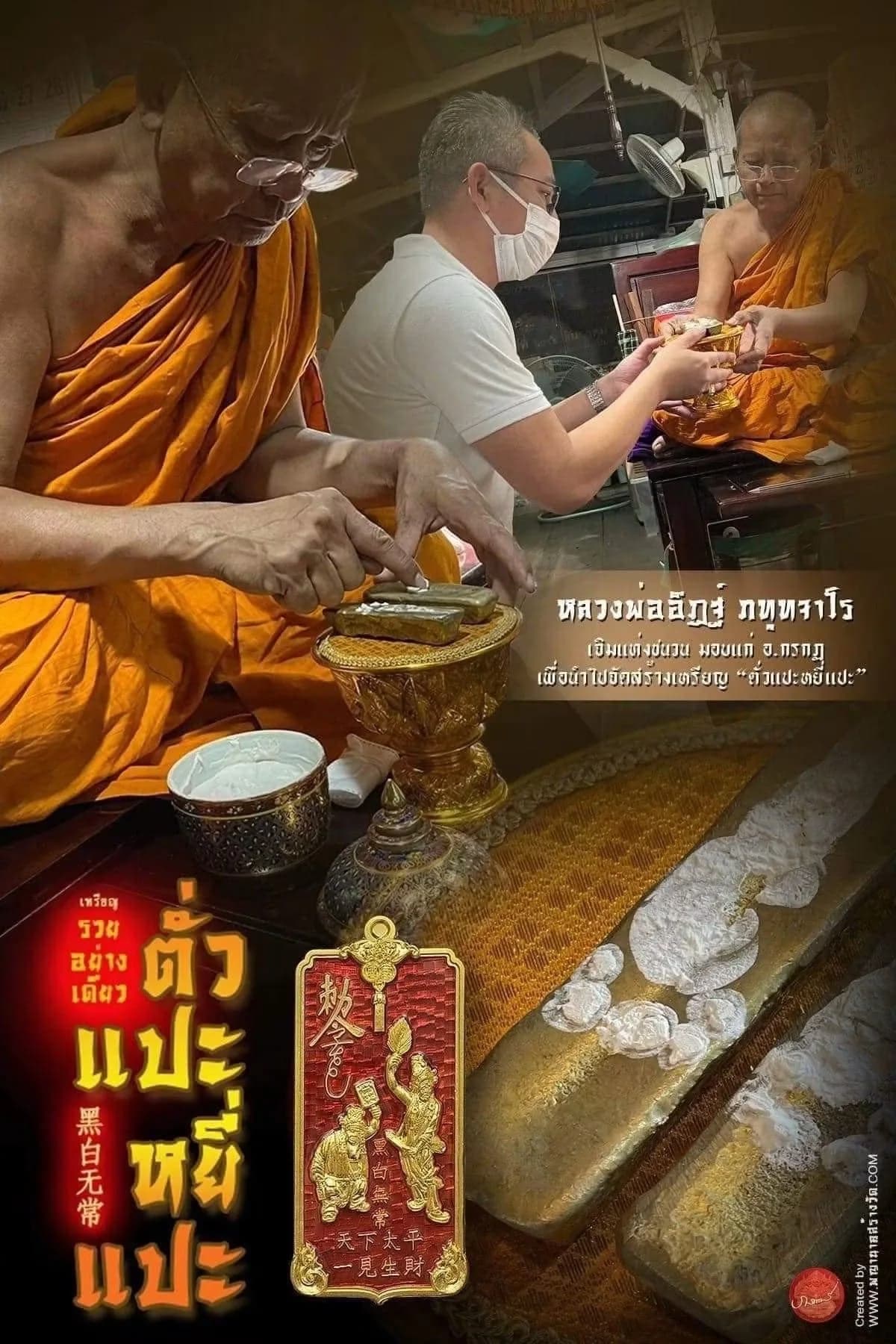
The Upside-Down Bat Clutching a Pair of Coins
From what has been told and understood among the Chinese and Thais of Chinese descent, the bat is believed to be an auspicious, good-fortune creature. In Chinese, the word for bat is bianfu (蝙蝠, pronounced bianfu), and the word fu (蝠) is a homophone of the word fu (福, fu, or hok in the Teochew dialect), which means good fortune. Thus, in Chinese architecture one often sees constructions that incorporate the symbol of the bat — it is a play on words and on meanings that is one part of Chinese culture itself.
Bats in Chinese art come in many forms, because the bat is a "symbol of happiness." Therefore, the image of the bat in Chinese art carries a special meaning, and it does not have only one meaning; the image of a bat combined with other things carries yet other meanings as well. For example:
A bat with a cloud means: may you have happiness as boundless as ascending to heaven.
A bat with a peach fruit means: may you have happiness and long life.
A bat clutching a coin means: may happiness arise for you before it does for others.
A bat hanging upside down means: happiness has already arrived.
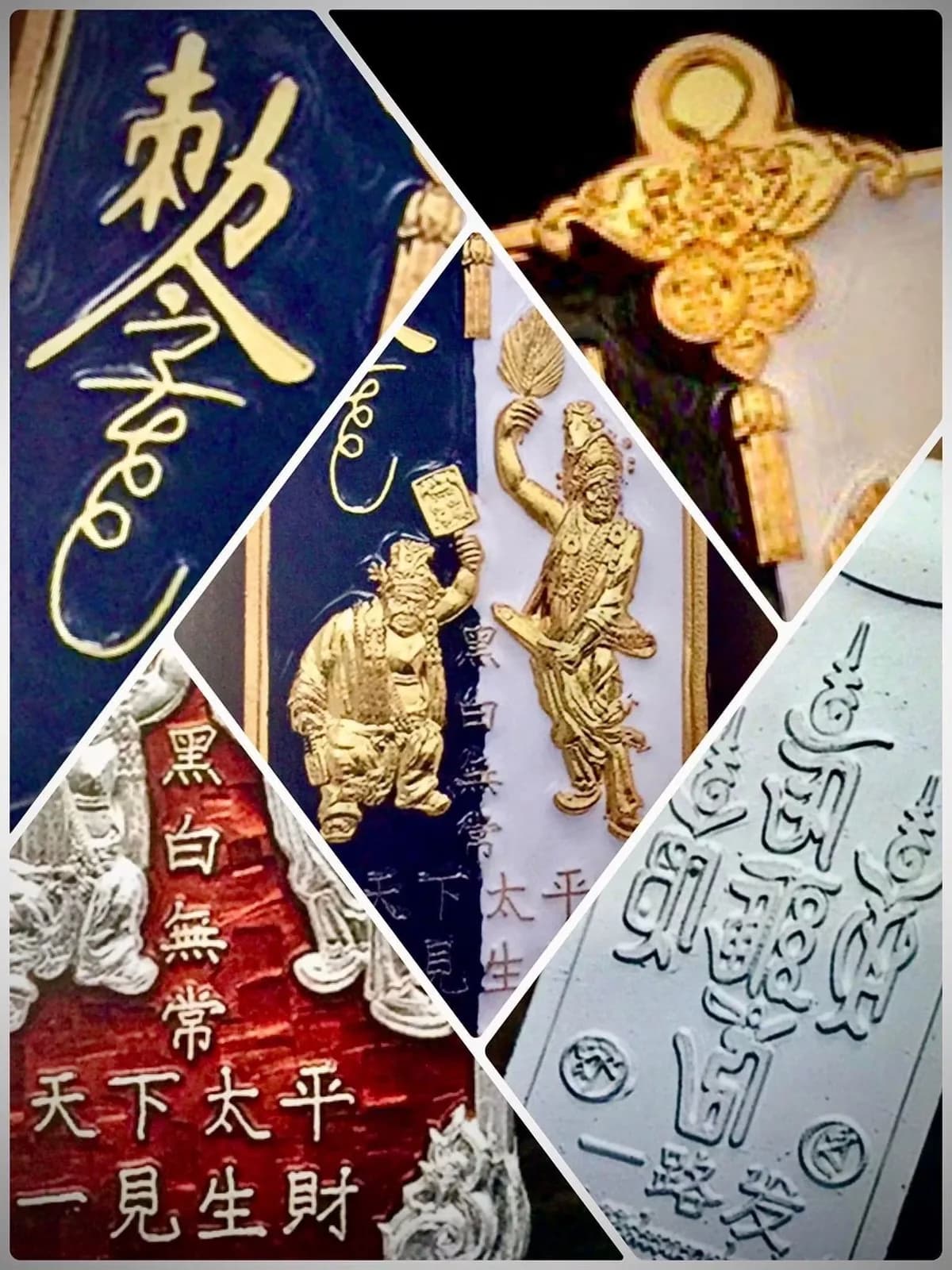
The Set of Chinese Characters on the Front Face
敕令 (Hu Tek Leng) — a heavenly decree; it can pass through all things save karma.
黑白無常 (Hei Bai Wuchang) — the White & Black Emissaries of Yama.
天下太平 (Tianxia Taiping) — peace beneath the heavens.
一見生財 (Yijian Shengcai) — to behold it is to prosper.
The White & Black Emissaries of Yama, who come to lead the souls of the dead to the next world, carry the implication that "life is an uncertain thing; everyone is ready to die at any time (both by day and by night)." Under the law of karma there is white and black, in accordance with the law of yin and yang. Therefore, living one's life to the fullest with heedfulness is the most important thing of all, for when the time of the law of karma arrives — whether the matter be good or ill — it can no longer be delayed or amended.
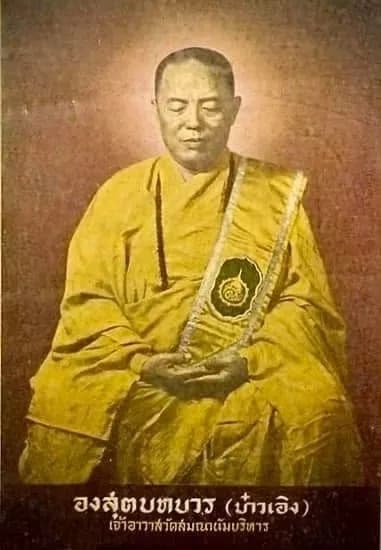
The Ariyasacca Talisman-Charm of Luang Pho Bao-oeng of the Annam-Sect Temple
The back of the medallion bears the Ariyasacca talisman-charm of Luang Pho Bao-oeng of the Annam-sect temple (Wat Yuan), above the auspicious characters 一路發 (Yalu Fat) "prosper all the way." Luang Pho Bao-oeng was a mighty adept of the Annam (Vietnamese) sect, one who summoned spirits and communicated with hidden things — such as deities, angels, and the spirits of monastics who had passed away — until it became manifest to his disciples and to people at large. He himself had an interest in matters of mind and spirit, so he began to research and to test for many years, until he was able to summon spirits down to possess a medium; and the results of summoning the spirits led him to discover what state those spirits were in, and how those spirits were receiving the karmic results of what they themselves had once done during the time they were still alive.
Closing Words
This chat about the Tua Pae Yi Pae medallion, which was produced by the Sappharachen Foundation and which Luang Pho Itthi of Wat Chulamanee graciously designed, is nothing much, really — I only wished to recommend a fine sacred object worth keeping and using, for at the very least one bows to it and carries it as a reminder to live one's life with heedfulness. As for collectors of amulets and sacred charms, do not be heedless either; do not overlook this medallion in the form of the "heavenly-decree tablet," produced and consecrated by Luang Pho Itthi. Do not let it be like the first-edition Kanchong medallion of B.E. 2548 and the Chokdi medallion — before you know it you will realize you want one to keep, and its collectors' price will already have climbed to the mountain peak. Farewell.
Compiled by
Khun Chang Bang Chak (Komsan Pisalsongkram)