
Twenty Years of the Champi Tao Wessuwan Medal
A fireside tale of how the "Champi '45" medal of Wat Chulamanee came to be — the origin of its shape, its double-Buddha yantra, and the great consecration rite of B.E. 2545 (2002).
A fireside tale — how the Champi '45 medal was born
B.E. 2545 (2002) to B.E. 2565 (2022)
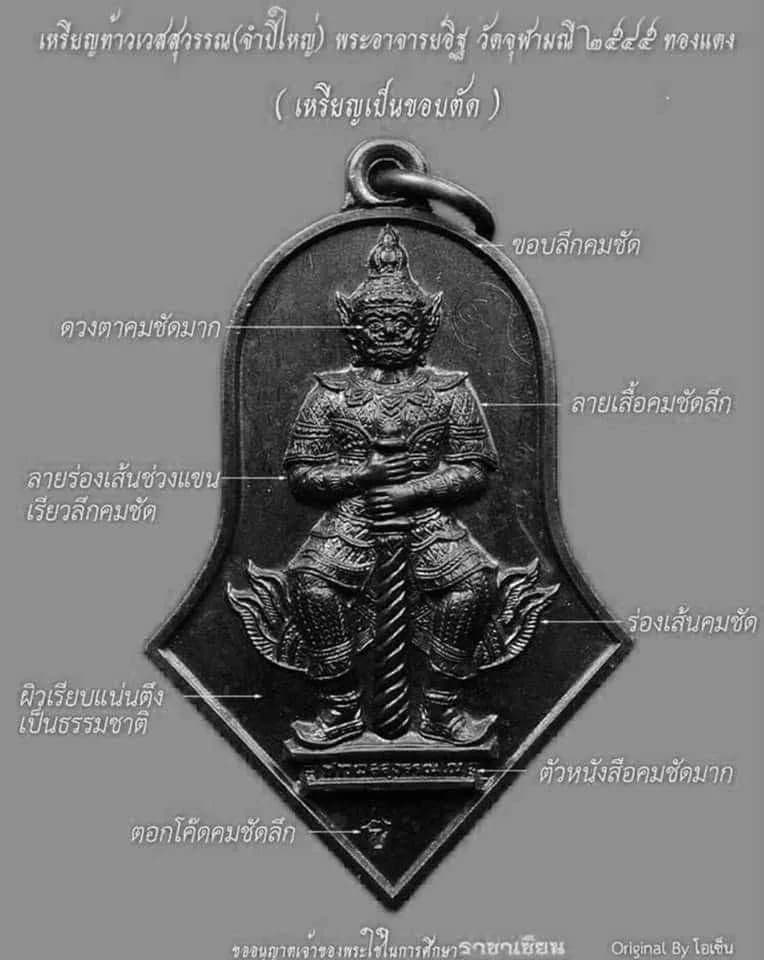
Casting our minds back to around B.E. 2544–2545 (2001–2002), the disciples of that era would often ask Luang Pho Itthi when he would create a Tao Wessuwan medal in the yaksha (guardian-giant) form for them to wear. Up to then, the medals he had made showed Tao Wessuwan in his deva (celestial) form — such as the first-edition medal of B.E. 2532 (1989) in the Phromma Suti Thep form, the inverted-sema Phra Phaisop medal of B.E. 2537 (1994), and the Phra Nuea Phrom medal, among others. That request was the very seed that first moved Luang Pho Itthi to design a Tao Wessuwan medal in the yaksha form.
Had any temple made a Champi-shaped amulet before?
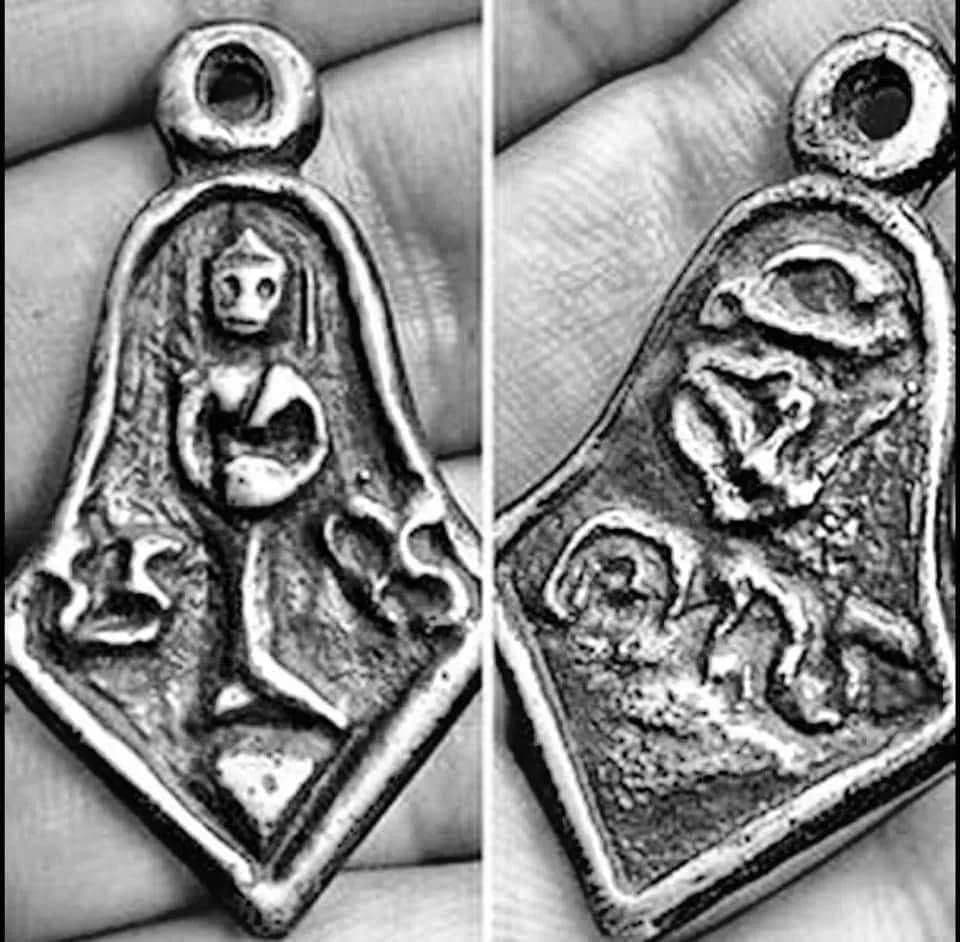
Let me back up a little. Had any temple in the amulet world ever made an amulet in this champi (magnolia-bud) shape before? The plain answer is "no." Something similar did exist, but it was not called a champi medal — collectors of the Mae Klong school call it the "Si Champa cast medal," namely the cast medal of Luang Pho of Wat Ban Laem, Wat Si Champa (the former name of Wat Phet Samut). Made around B.E. 24xx, it is an antique cast medal whose proportions are not especially refined and which is hard to find today. Yet the Champi '45 medal of Wat Chulamanee by Luang Pho Itthi was never intended to take this Si Champa medal as its model!
The birth of the "Champi '45" shape
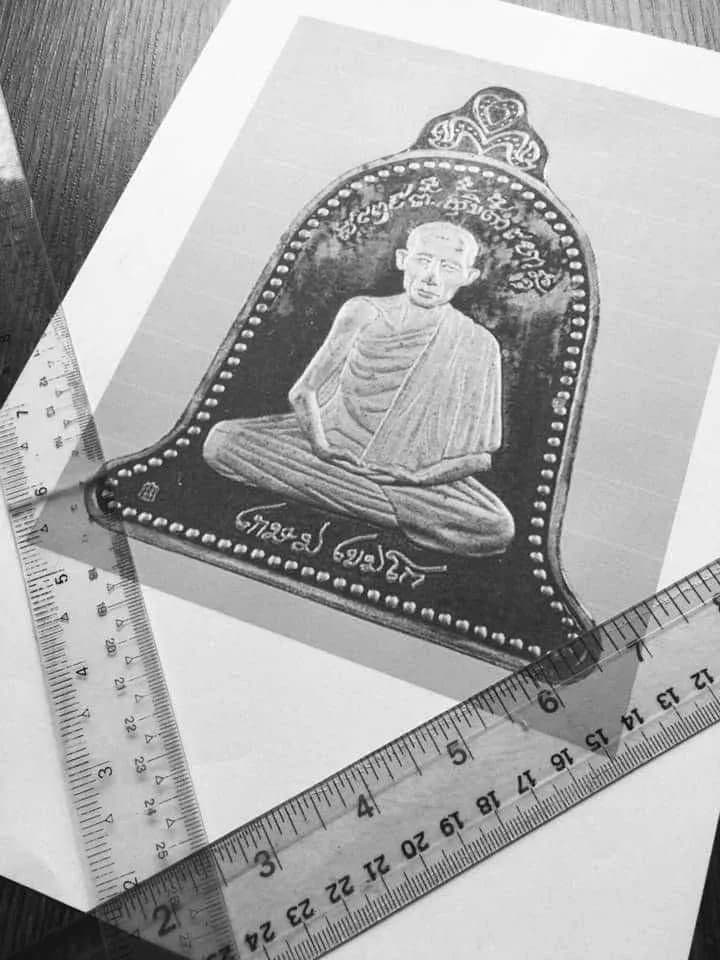
The true origin of the Champi '45 shape of Wat Chulamanee is this: Luang Pho Itthi developed and adapted it from the bell-shaped (rakhang) medal of Luang Pho Kasem Khemako. At first he thought to take the bell-medal as the model on which to place the yaksha-form Tao Wessuwan, but it still did not please him or feel right. Adjusting again and again, he tried laying two rulers extending down from the lower edge of the bell arch of the original bell-medal template; and when he placed the yaksha-form Tao Wessuwan onto it, it turned out beautifully balanced. So Luang Pho ordered the disciple drafting the design to change it from the bell shape to this new shape — and that became the origin of the first-edition Champi medal of '45, potent and renowned to this very day.
The reverse yantra — the double-Buddha (Phuttha Son)
On the reverse he placed his own personal yantra: the double-layered Phuttha Son (nested-Buddha) yantra. Within the yantra sit the number 3 (the Three Refuges — or in another sense the Brahma world, the deva world, and the human world), the number 7 (the Seven Factors of Enlightenment, "sa dha wi pi pa sa u"), and the number 9 (the Nine Virtues, "a sang wi su lo pu sa phu pha"), encircled by the syllables "Indra guards," "Brahma guards," and "Thao Kuwero guards." Above the yantra is "Na Thewada" and below it is "Dhoh." This yantra is the very one that Grandfather Wessuwan revealed in a vision and bestowed upon Luang Pho Itthi to use.
The making and the numbers minted
Once the design was settled, Luang Pho Itthi entrusted the master craftsman Tum of the Sophon Lohaphan foundry to cut the dies and oversee the entire minting. Luang Pho Itthi handed over the sacred alloy and consecrated materials he had gathered and empowered over several decades — including sought-after medals of famous masters from earlier generations that he had collected — for the craftsman to melt and blend with the base metal, then roll into sheets for striking each material of medal in turn.
On that occasion the champi-shaped medals were minted in the following materials:
Gold — 80 medals
Silver — 500 medals
Enamelled silver — 500 medals
Nawaloha (nine-metal alloy) — 500 medals
Blackened copper — 150,000 medals
Lead — 150,000 medals
Sacred-powder — 150,000 medals
The great consecration rite of B.E. 2545
But the deva-consecration rite of B.E. 2545 held not only the champi-form medals and powder amulets; other medals and sacred objects also joined that ceremony, namely:
The Hanuman Maha Prap medal
The Chinese-fan medal
Cast Tao Wessuwan images in pendant size, both single-face and double-face dies
A cast Tao Wessuwan image in altar size, 18 inches
That is all I will tell tonight — just a taste to whet the appetite. Another day I will carry on the story of the great deva-consecration rite of '45. For today, may all my friends have good fortune, be free of illness, be safe, and sleep with sweet dreams. Good night.
Compiled by
Khun Chang Bang Chak (Komsan Pisalsongkram)