
A Leisurely Talk on Tua Pae and Yi Pae — When You Cannot Ask a Boon from Above, Come Ask Us (EP.1)
A leisurely talk on Tua Pae and Yi Pae (the White Emissary and the Black Emissary of Yama) 黑白無常, the attendants of Phaya Yommarat — their origins, characters, and the legend of the filial piety and fidelity of Chia Pi-an and Fan Wujiu.
A Tale Retold — A Leisurely Talk on Tua Pae and Yi Pae, "When You Cannot Ask a Boon from Above, Come Ask Us" (EP.1)
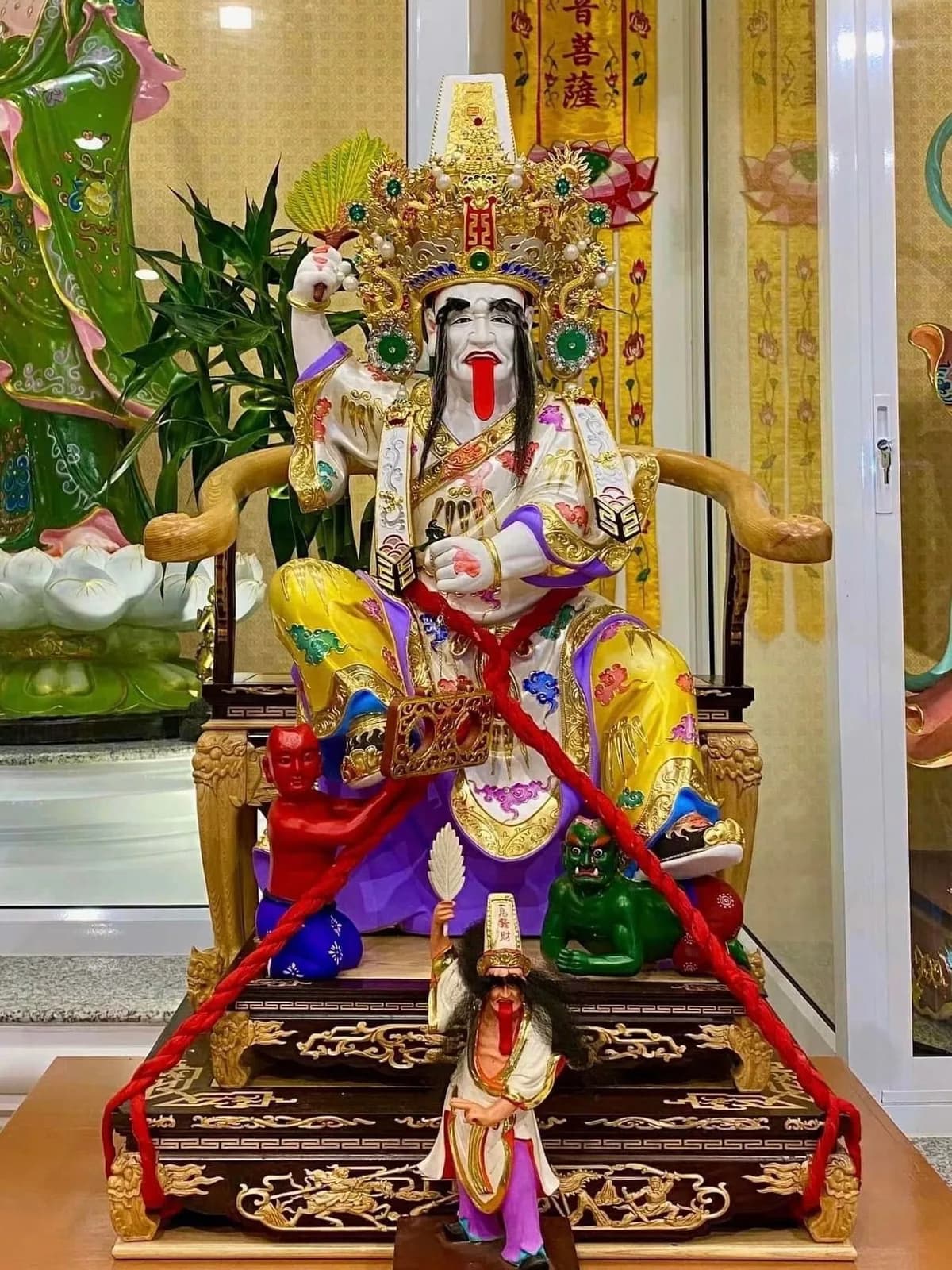
Who Are the White Emissary and the Black Emissary?
Tua Pae and Yi Pae (Chia Kong – Fan Kong, or Poy Ia – Chit Ia) 黑白無常, the White Emissary and the Black Emissary of Yama — if you have ever watched a Chinese ghost film, you must have caught a glimpse of them. But to draw a comparison with Thai belief so as to picture them more easily, they are rather like the close attendants of Phaya Yommarat: Suwannalekha, whose duty is to inspect the ledger of merit written on plates of gold, and Suwanalekha, whose duty is to inspect the ledger of sin written on animal hide.
When we compare the Black Emissary and the White Emissary, the colors white and black are like good and evil, which must be told clearly apart — a definition of the law of karma that no one can escape. As for their appearance, the White Emissary is tall, with a long protruding tongue, holding a fan and wearing a tall hat inscribed 天下太平, "Peace Under Heaven." The Black Emissary is short, with black skin, holding chains and shackles and a placard reading "For those who do good, a blessing; for those who do evil, punishment," while upon his hat is written 一見生財, "Whoever sees me will gain fortune." But the one who gets to see him is the one whose lifespan is spent (the one already dead) — which means that no matter how troubled or how peaceful this world may be, and whether or not one gains fortune upon seeing him, it no longer concerns that person at all, for that person has already departed from this world.
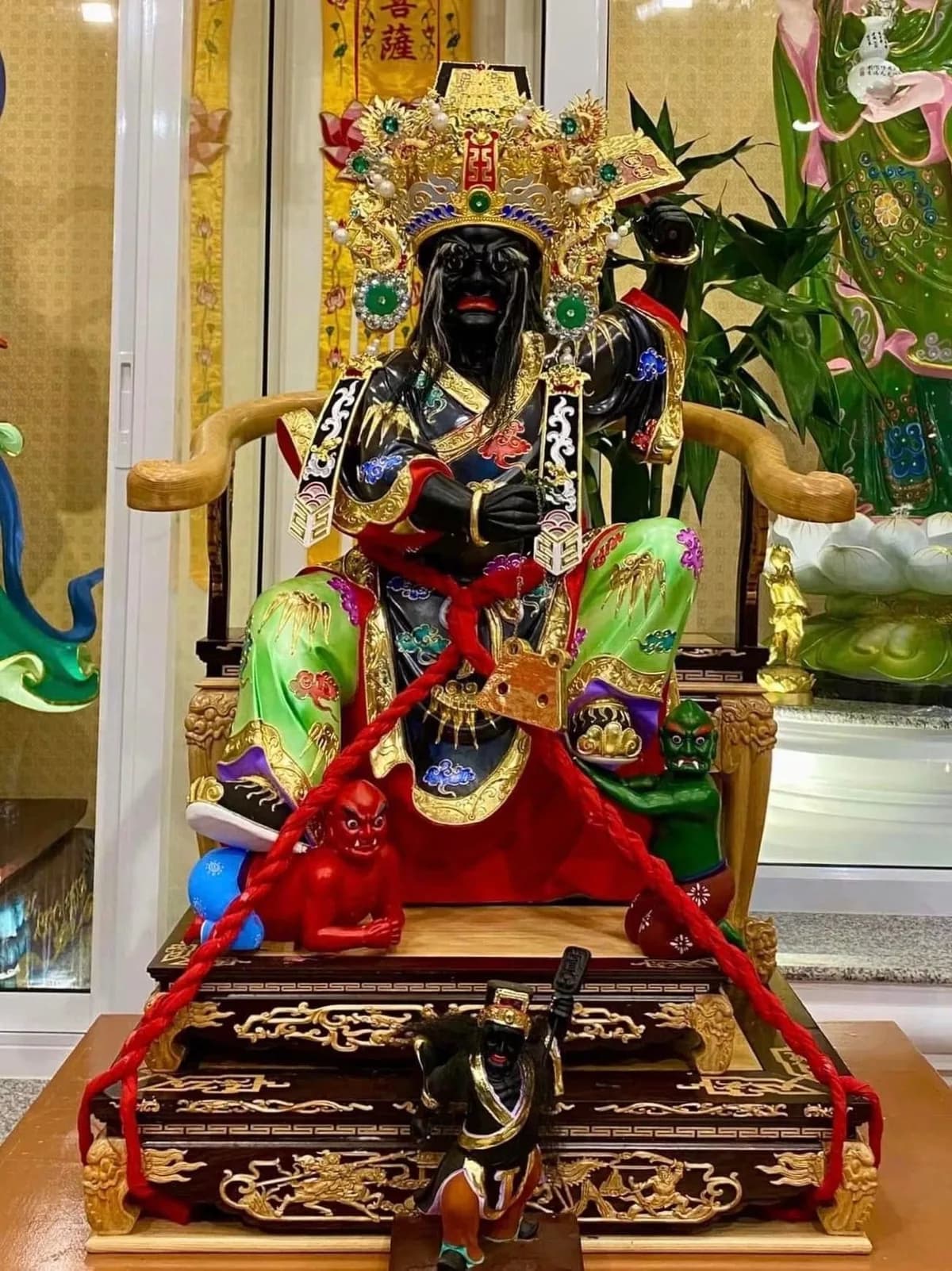
The Duty of the White and Black Emissaries
It is said that the duty of the White and Black Emissaries is to come and collect the souls of those whose lifespan has ended, as recorded in the birth-and-death register of Phaya Yommarat. When Phaya Yommarat sees who is to die today or whose lifespan is at its end, the list of names is sent to the City Pillar deity (Sia Hong); the City Pillar deity then passes it on to the Black and White Emissaries to handle, having the Guardian of the Place (Pae Kong) guide the Black and White Emissaries on their journey to collect the souls, so that they may await judgment.
The Legend of Filial Piety and Fidelity
The Black and White Emissaries are held to be keepers of their word, bound together by a deep and harmonious affection. There are many legends about them, but I will present the story that most impressed me. The White Emissary (Tua Pae, or Chit Ia) was named Chia Pi-an, Chia Kong 謝必安 (Xie Bi'an); the Black Emissary (Yi Pae, or Poy Ia) was named Fan Wujiu, Fan Kong 范無救 (Fan Wujiu). These two were close friends — so close, one could say, that each would die in the other's place. Just think about it: for a person to be willing to die in another's place, how deep must their mutual love and respect be?
Chia Pi-an was wrongly imprisoned though he was innocent, and Fan Wujiu was the jailer. On New Year's Eve that night, a meal was served to the prisoners in the jail, and everyone ate — all except Chia Pi-an, who only sat gazing at the food, sighing and weeping. Fan Wujiu asked him why he wept, and why he would not eat. Chia Pi-an said that at such a New Year's time he was worried about his mother outside; his mother had never been of strong health to begin with, and now that he himself was locked up like this, he did not know whether his aged mother was faring well or ill. Seeing this food made him think of his mother — how could he bring himself to eat? Seeing his beloved friend suffering out of filial concern for his mother in this way, Fan Wujiu was moved by such filial piety, and so he said to Chia Pi-an, "I will pledge my own office as surety and release you, so that you may have the chance to go see and care for your mother — but you must promise that in 7 days you will return to await the verdict." Such was the depth of their mutual love and respect that he would extend such trust, for if Chia Pi-an did not return, the one who would bear the punishment in his place would be Fan Wujiu himself.
When Chia Pi-an was released, he journeyed home to his mother — but to his great sorrow, his mother had already passed away before he arrived. A son's duty is to arrange the funeral according to custom, and a funeral takes seven days; by the time he could return to reenter the jail, he had passed the appointed seven days. As a result, Fan Wujiu had to take responsibility, and the way he took responsibility was to drink poison out of accountability to his duty. When he drank the poison, it spread throughout his whole body, and it was this very poison that turned his corpse black.
When Chia Pi-an returned, it was already too late. Seeing that Fan Wujiu had to die in the line of duty because he himself had failed to keep his word, he was overcome with grief — his mother was gone, and now his friend had died because of him too. So Chia Pi-an resolved to hang himself; and when he hanged himself, his tongue was thrust out and stretched long — which is why the White Emissary has a long, fearsome protruding tongue.
Phaya Yommarat, seeing that the two held each other in love and respect, bore their responsibilities, and were faithful, appointed them as his assistants, tasked with awaiting the souls to bring them before him for judgment according to Phaya Yommarat's warrants. As for what makes the Tua Pae and Yi Pae amulets so special, if I have the chance I will come and chat about it in a future occasion.
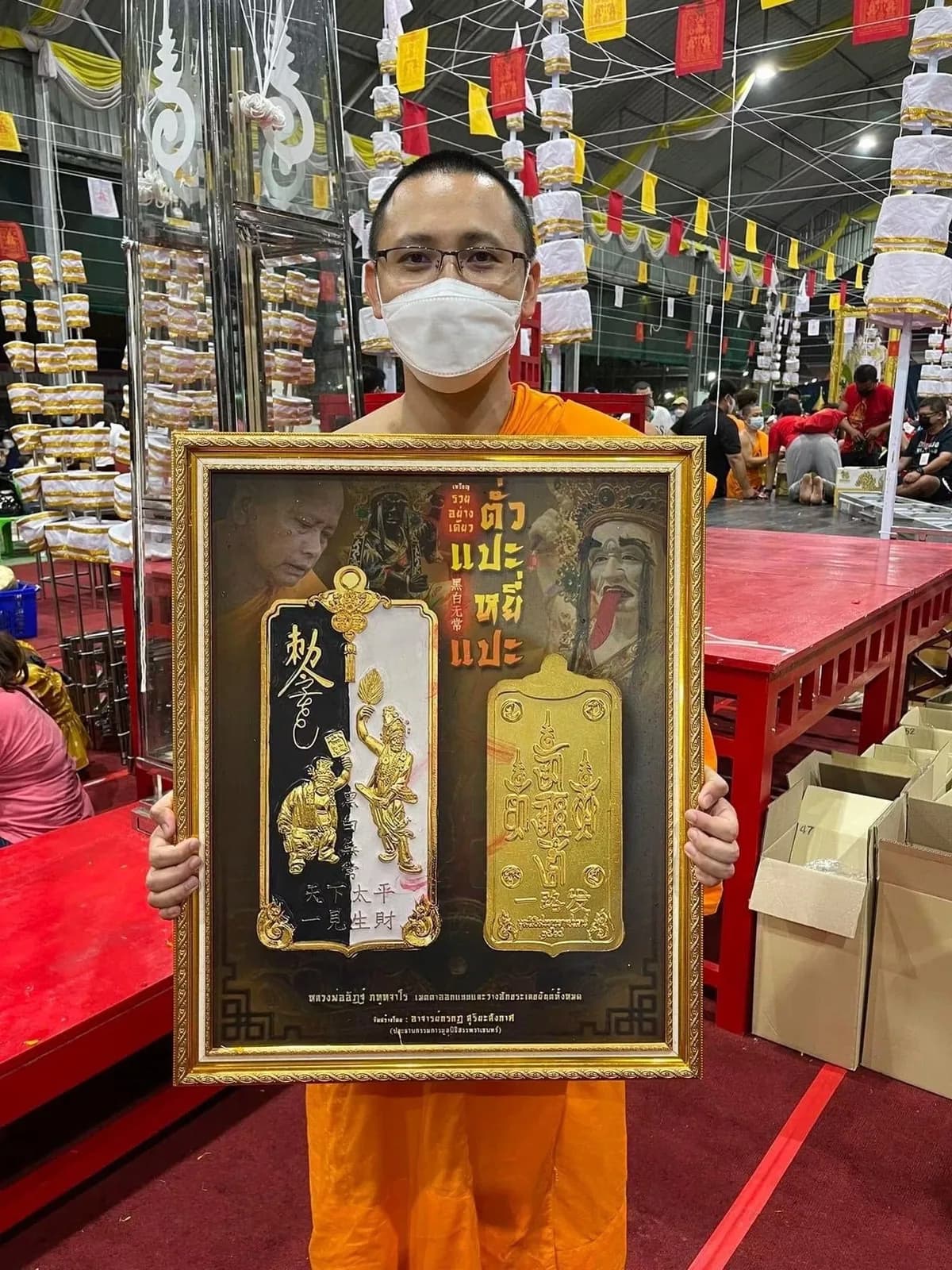
The Meaning of Their Names
必安 Pi-an — his name means "Whoever does good shall have only peace."
無救 Wujiu — his name means "Whoever does evil, when karma follows to bear its fruit, no one can save."
In closing, may you all be ever mindful of good deeds and evil deeds.
Compiled by
Khun Chang Bang Chak (Komsan Pisalsongkram)